
What is a parking barrier?
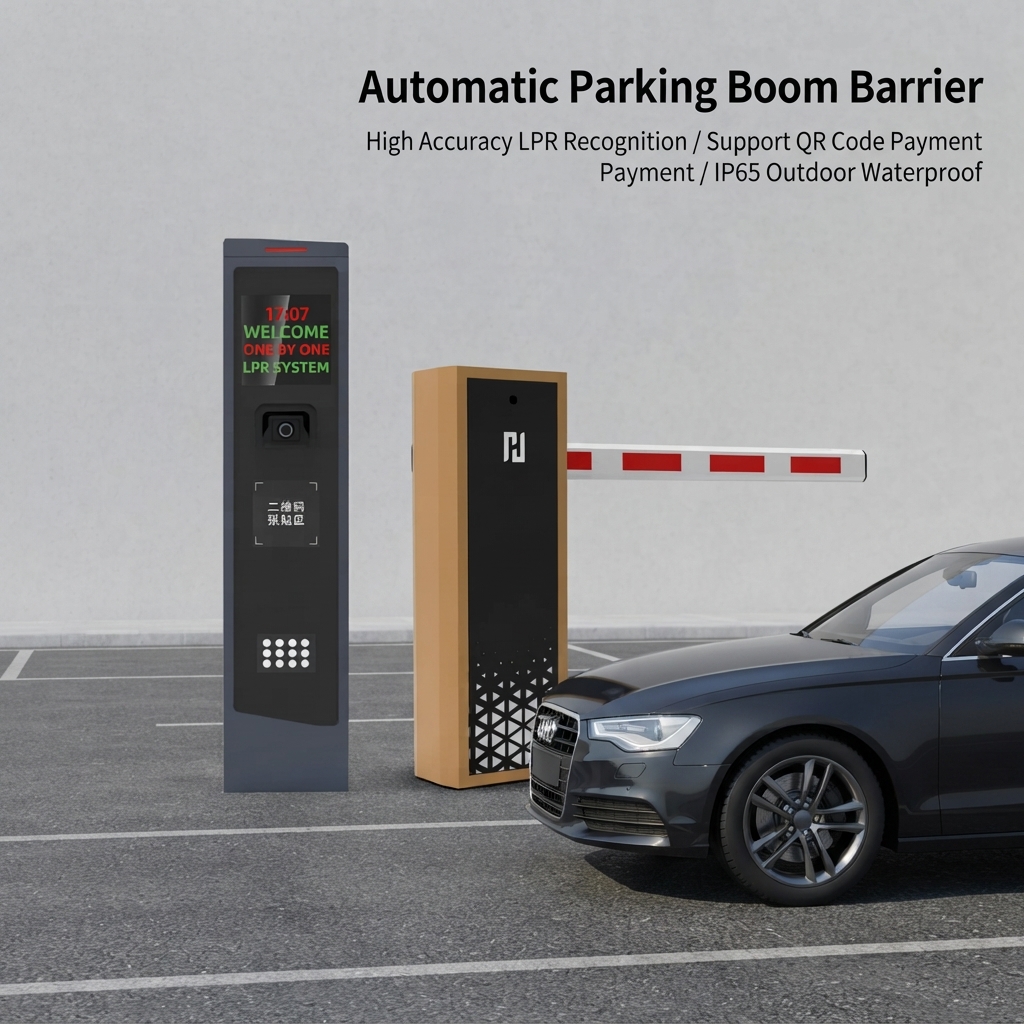
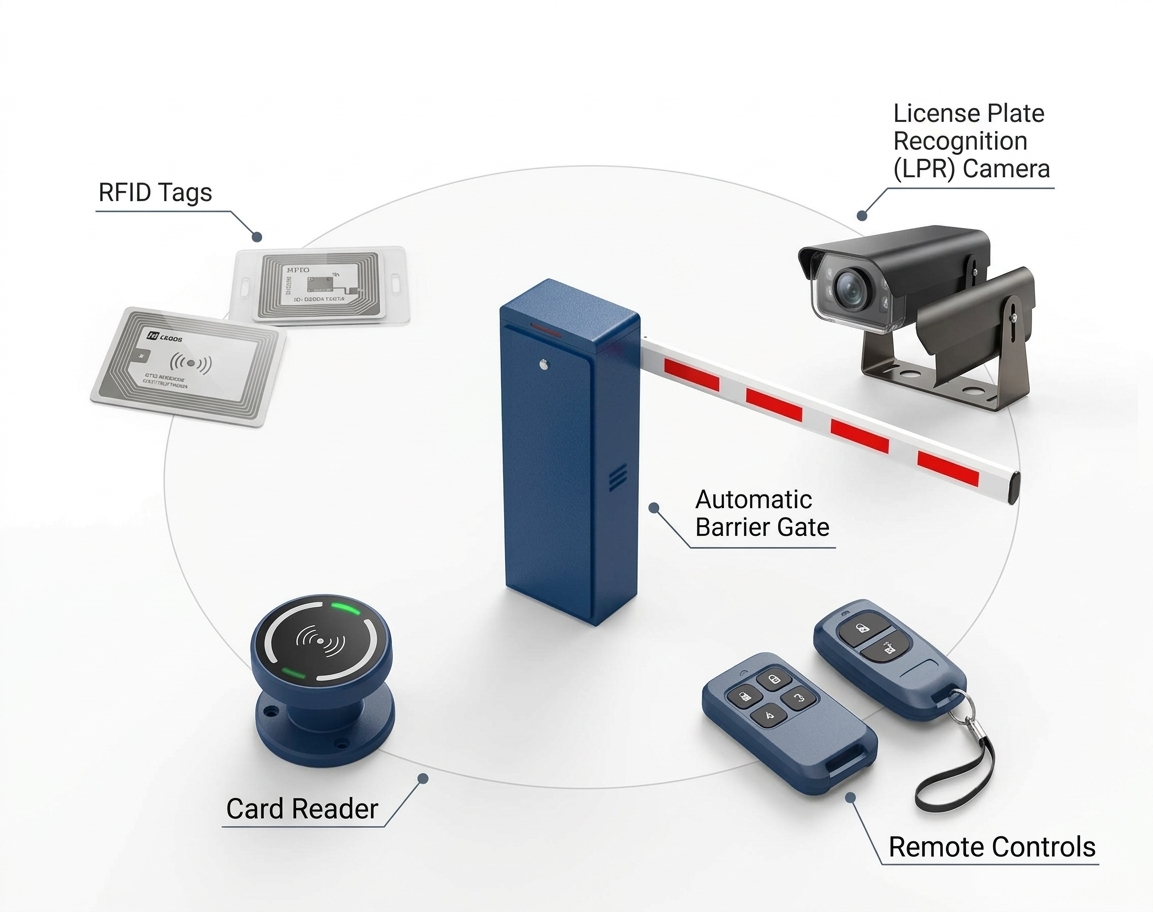
A parking barrier is a vehicle access control device that blocks or releases the passage of cars, motorcycles and other vehicles at an entrance or exit. In automated systems, a movable arm — also called a barrier arm or boom — rises to allow authorized passage and lowers to block the lane again. The barrier can be operated by remote control, RFID card, license plate reader (LPR/ALPR), ticket, intercom or an integrated parking management system.
1. What is a parking barrier used for?
A barrier helps organize vehicle flow and restrict entry to authorized people or vehicles. It is used in commercial parking lots, residential condominiums, corporate buildings, hotels, hospitals, universities, logistics centers, factories, loading and unloading areas, and controlled access points. When connected to a management system, it can also support entry and exit logging, credential validation and analysis of parking occupancy.
2. What are the main types of barrier?
Straight boom barrier
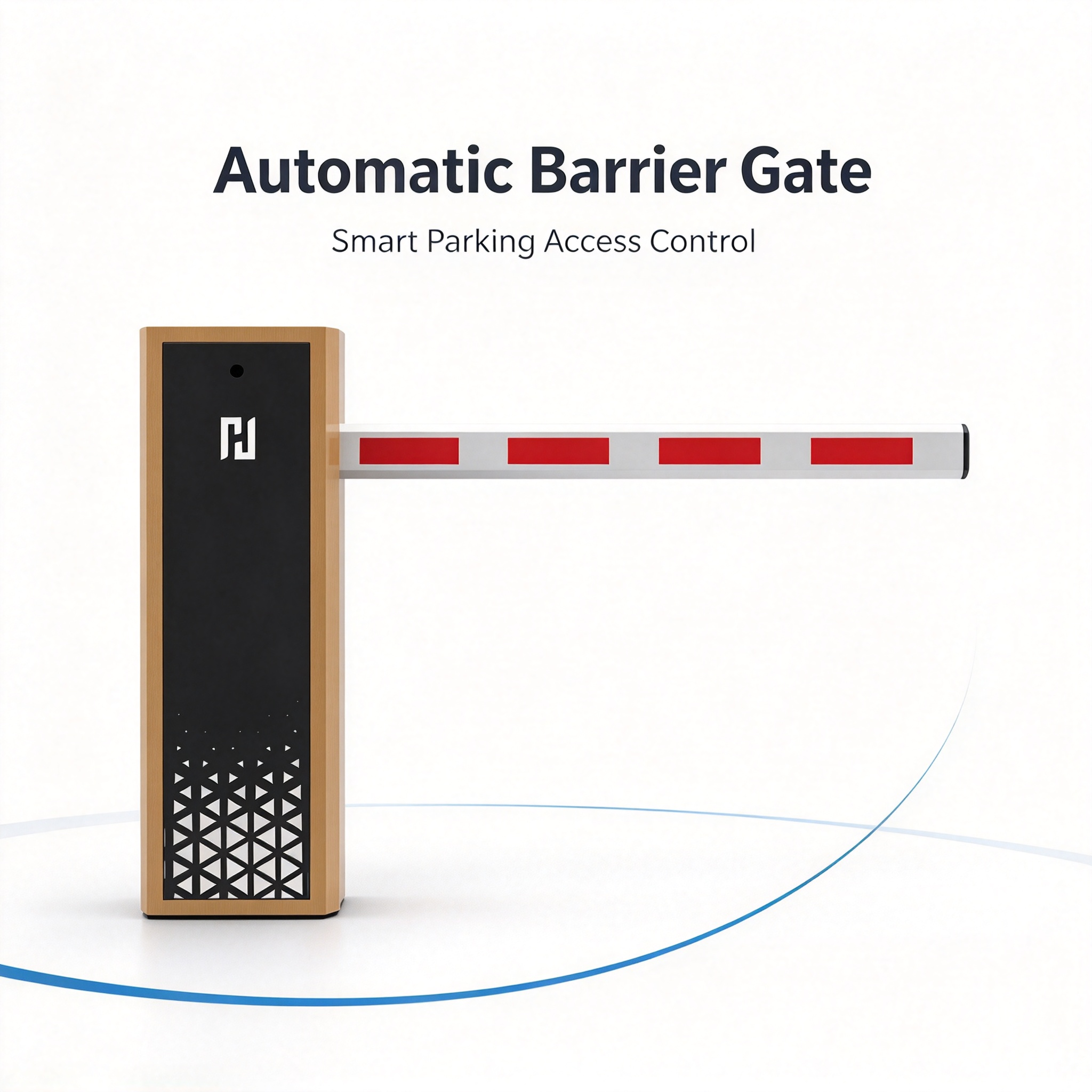
The straight boom barrier is a common choice for entrances with sufficient clear height and simple geometry. The arm rises in a rotating movement, covering the width defined for the lane. When selecting a model, check the usable passage width, the cycle frequency, the required speed and the space available for installation.
Articulated or folding boom barrier
The articulated boom folds during opening and may suit underground garages, ramps or locations with limited headroom. Before specifying this type, check the ceiling height, the opening angle, the position of the barrier cabinet and the vehicle clearance space. The articulation must be compatible with the actual installation conditions.
High-speed barrier gate
At accesses with high traffic volume, a high-speed barrier gate can reduce waiting time when it is correctly sized and integrated with access control. Assess the hourly flow, the boom length, the duty cycle, the motor capacity and the vehicle detection features. The advertised speed should be confirmed for the model and configuration actually supplied.
Barrier integrated with LPR/ALPR
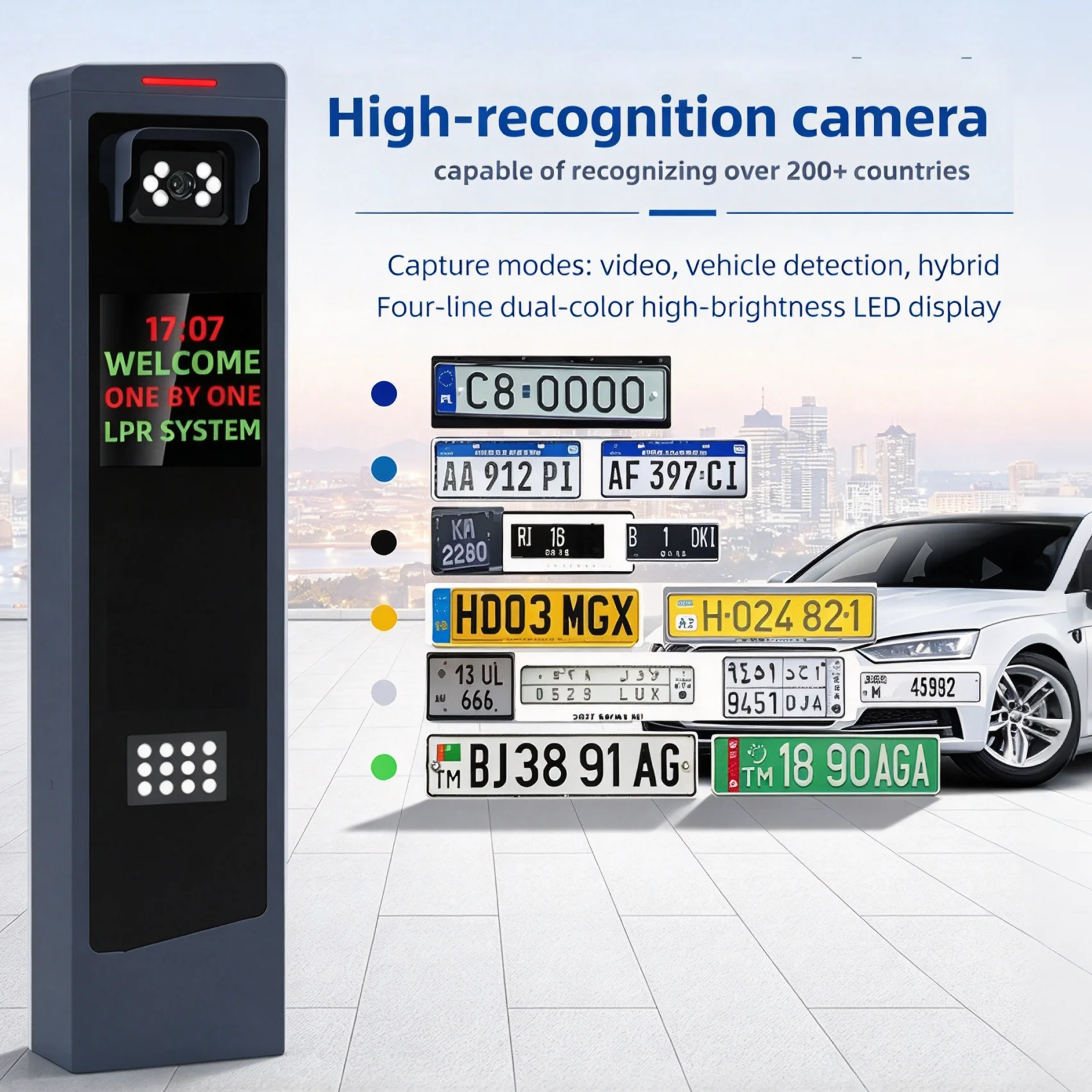
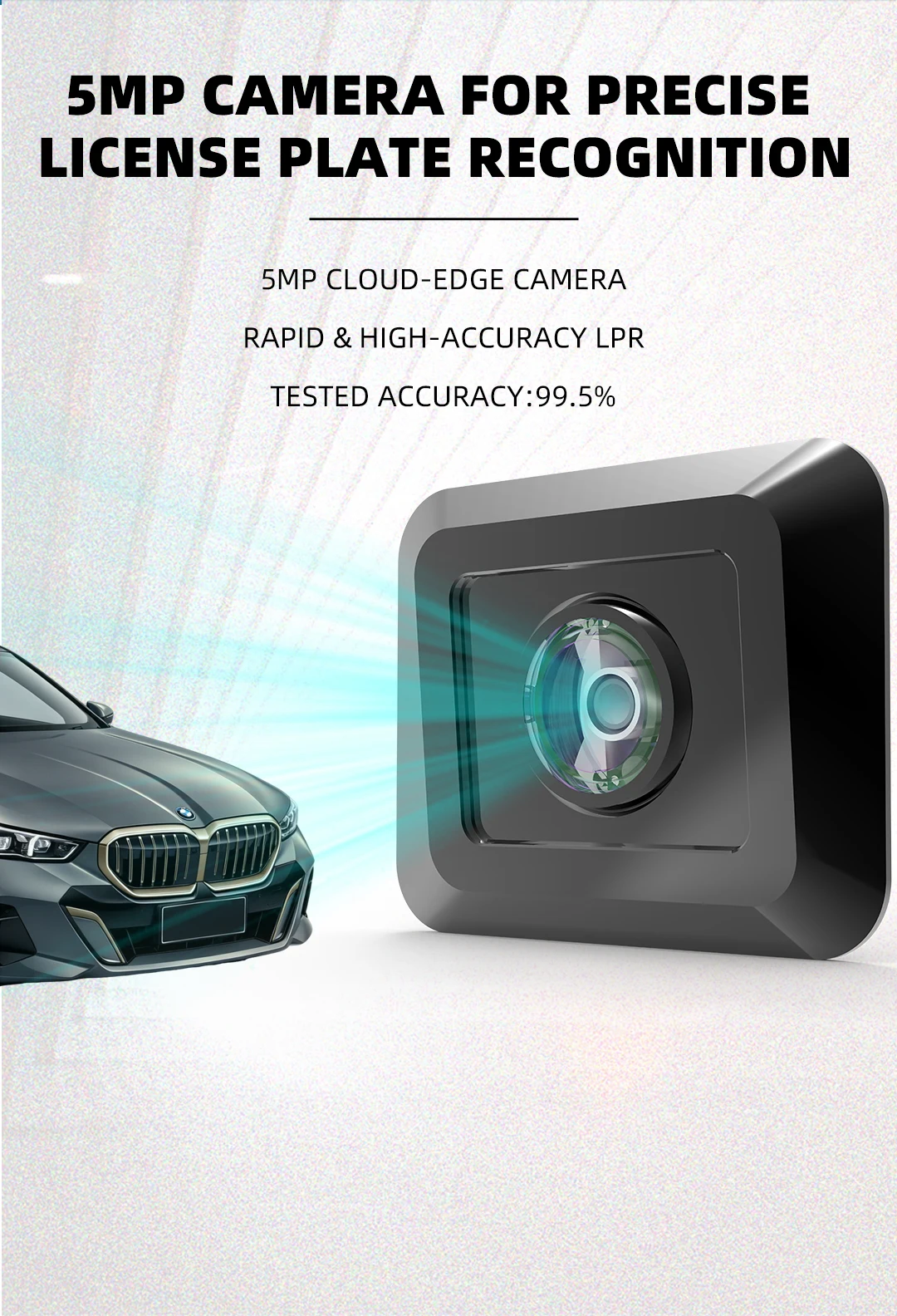
An LPR/ALPR system uses a camera and software to read the vehicle plate. The recognized plate can be compared against an authorized vehicle list, access rules or parking records. When authorization is confirmed, the controller can trigger the barrier. The result depends on image quality, lighting, camera positioning, plate condition and the software configuration for the plate format used in Brazil.
RFID barrier
RFID control identifies a credential, such as a card, vehicle sticker or compatible tag. When the reader recognizes a valid credential, the system authorizes the barrier to open. This option can work well for residents, employees and recurring fleets. For visitors, it can be combined with an intercom, QR code, temporary registration or validation by an operator.
3. How does an automatic barrier gate work?
Typical operation follows five steps:
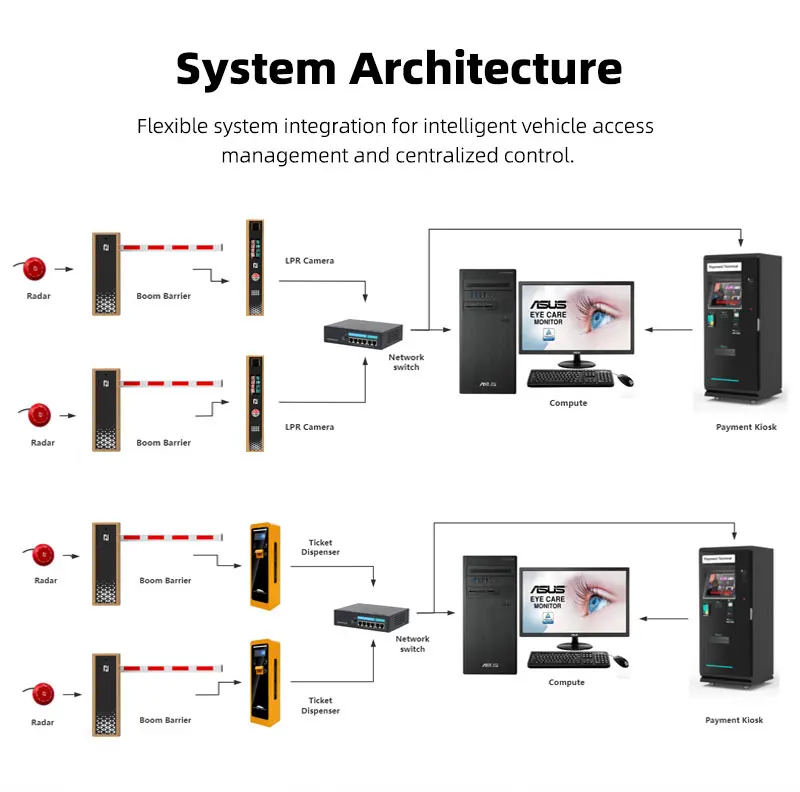
- Detection or request: a vehicle arrives at the lane and is detected by an inductive loop, radar, sensor or user activation.
- Identification: the system reads the plate, checks an RFID card, validates a ticket or receives authorization from an operator.
- Permission check: the controller verifies whether the vehicle or user meets the configured rules.
- Barrier opening: the controller drives the motor and raises the boom to allow passage.
- Safe closing: after the vehicle leaves the risk zone, the sensors and control logic allow the boom to return to the closed position.
The exact sequence varies by project. The installation must provide for safety logic, signage, emergency procedures and testing before going into operation.
4. Which safety features should be evaluated?
Safety does not depend on the barrier boom alone. Check compatibility with radar sensors, inductive loops or other presence devices; anti-crush or reverse logic; warning lights; adjustable speed; manual release in an emergency; and procedures for power failure. Device selection should take into account the risk at each site, including pedestrians, cyclists, motorcycles and large vehicles. No sensor replaces a risk assessment and a correct installation.
5. Where are parking barriers used?
- Residential condominiums: control of residents, visitors and service providers.
- Commercial parking lots and shopping centers: organization of entrances and exits, integration with billing and space management.
- Offices and hotels: access for employees, guests and authorized vehicles.
- Industrial plants and logistics centers: control of fleets, trucks, docks and restricted areas.
- Hospitals, schools and universities: separation of flows and management of authorized access.
- Public facilities and high-traffic areas: lane control, event logging and integration with security systems.
The ideal solution depends on the required security level, the number of vehicles, the user profile and the site's operating rules.
6. How to choose the right barrier for your site?
Before buying, document the site requirements:
- Lane width: measure the usable passage and allow for wide vehicles.
- Clear height: check whether a straight boom can open without touching the ceiling, beams or signs.
- Usage intensity: estimate cycles per hour and per day, including peak hours.
- Operating speed: balance throughput against verification time and safety.
- Authorization type: choose between remote control, RFID, LPR/ALPR, ticket, intercom or a combination.
- Environmental protection: confirm the ingress protection rating and suitability for rain, dust, heat and corrosion.
- Integration: check the interfaces with parking software, access control and the network.
- Maintenance and support: request the manual, spare parts, training and commissioning guidance.
- Power and contingency: confirm voltage/frequency, grounding and the procedure for power failure.
- Standards and local requirements: ask the supplier for the documentation applicable to the model and to the Brazilian project.
Do not choose on price or nominal speed alone. Compatibility between the barrier, the sensors, the controller and the site's actual traffic flow is essential for reliable operation.
7. How can BAROXON be part of a vehicle access solution?
BAROXON offers product categories for vehicle access control, including automatic and high-speed barriers, LPR/ALPR license plate recognition systems, RFID control, radar sensors and accessories. Depending on the project requirements, these components can be specified as an integrated solution to identify vehicles, validate permissions and command the barrier. The final configuration should be confirmed with the technical team, especially regarding the compatibility of the plate reader with Brazilian plate formats, software interfaces, power supply and safety requirements.
To request a technical recommendation, prepare the lane width, the estimated number of vehicles per day, the type of installation, the desired authorization method and the existing systems that need to be integrated.
8. Frequently asked questions
Is a parking barrier the same as an automatic gate?
Not exactly. A barrier usually uses an arm that blocks a traffic lane and is intended to control vehicle flow. An automatic gate typically closes an opening with sliding or swing leaves. The choice depends on space, the required level of physical closure and the type of traffic.
Can a barrier open automatically when it recognizes the plate?
Yes, when an LPR/ALPR camera, the software, the controller and the barrier are compatible and configured for it. The system must validate the plate according to access rules and include an alternative procedure for unrecognized plates or exceptional situations.
Which is better: RFID or license plate recognition?
There is no single answer. RFID can be practical for recurring users with distributed credentials; LPR/ALPR can reduce the need for physical cards and log each passage by plate. Some sites combine both methods for residents or employees and keep a separate process for visitors.
Does the barrier need safety sensors?
The required devices depend on the risk assessment, the lane geometry, pedestrian flow and the applicable standards. Presence sensors and adequate control logic help prevent closing on vehicles or people, but they must be properly installed, adjusted and tested.
How do you maintain an automatic barrier?
Follow the manufacturer's maintenance plan. In general, this includes visual inspection of the boom and fasteners, testing of sensors and emergency devices, checking for abnormal noise or vibration, proper cleaning, verification of connections and logging of faults. The frequency should take into account the cycle volume and environmental conditions.
Conclusion
A parking barrier is more than an automatic arm: it is part of an access control system that combines mechanical equipment, identification, sensors and operating rules. To choose correctly, assess the lane, the traffic volume, the environment, the safety requirements and the integration needed. BAROXON offers barrier categories and vehicle access components that can be evaluated according to project needs. Request a technical specification before finalizing the configuration.