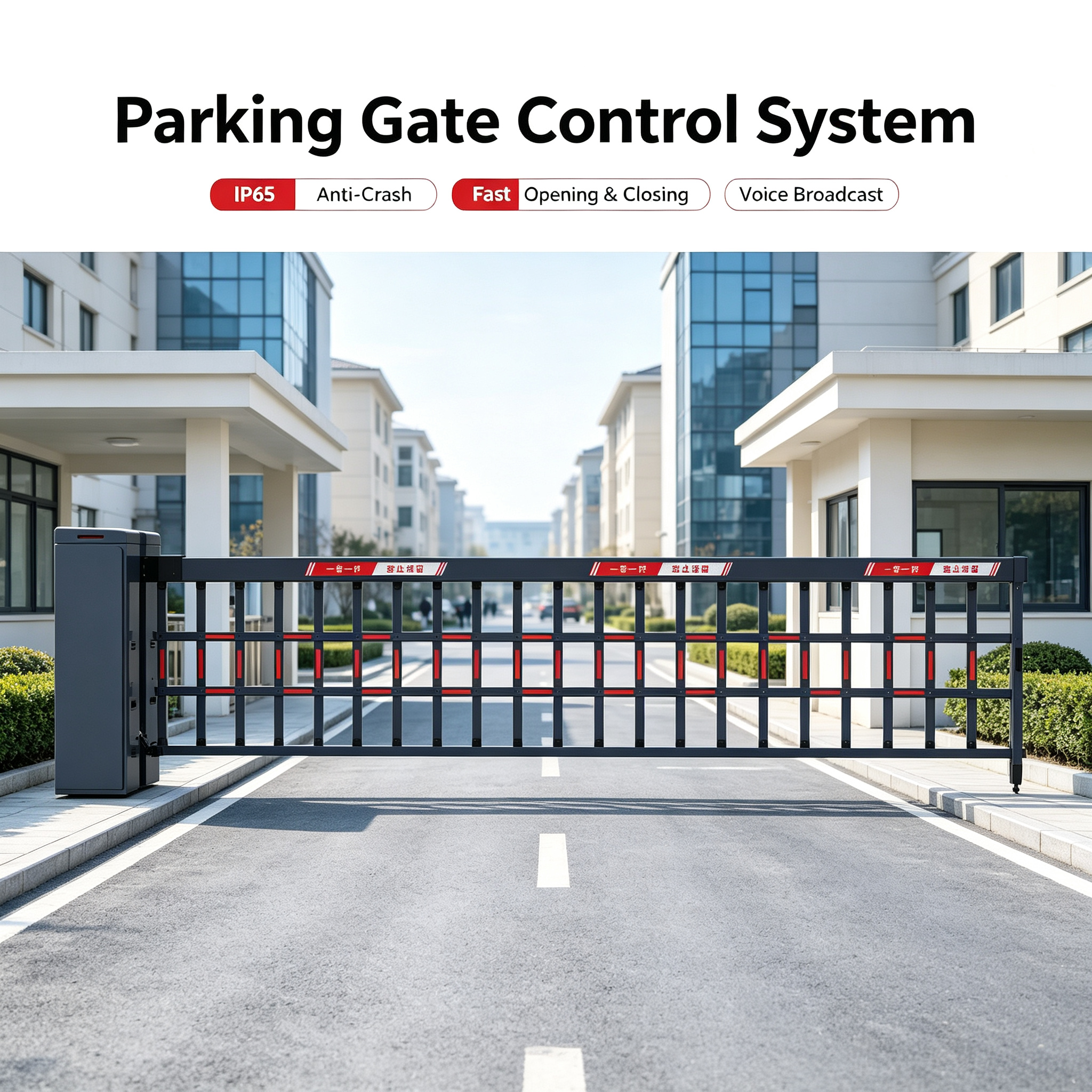
How to Reduce Queues at Parking Entrances
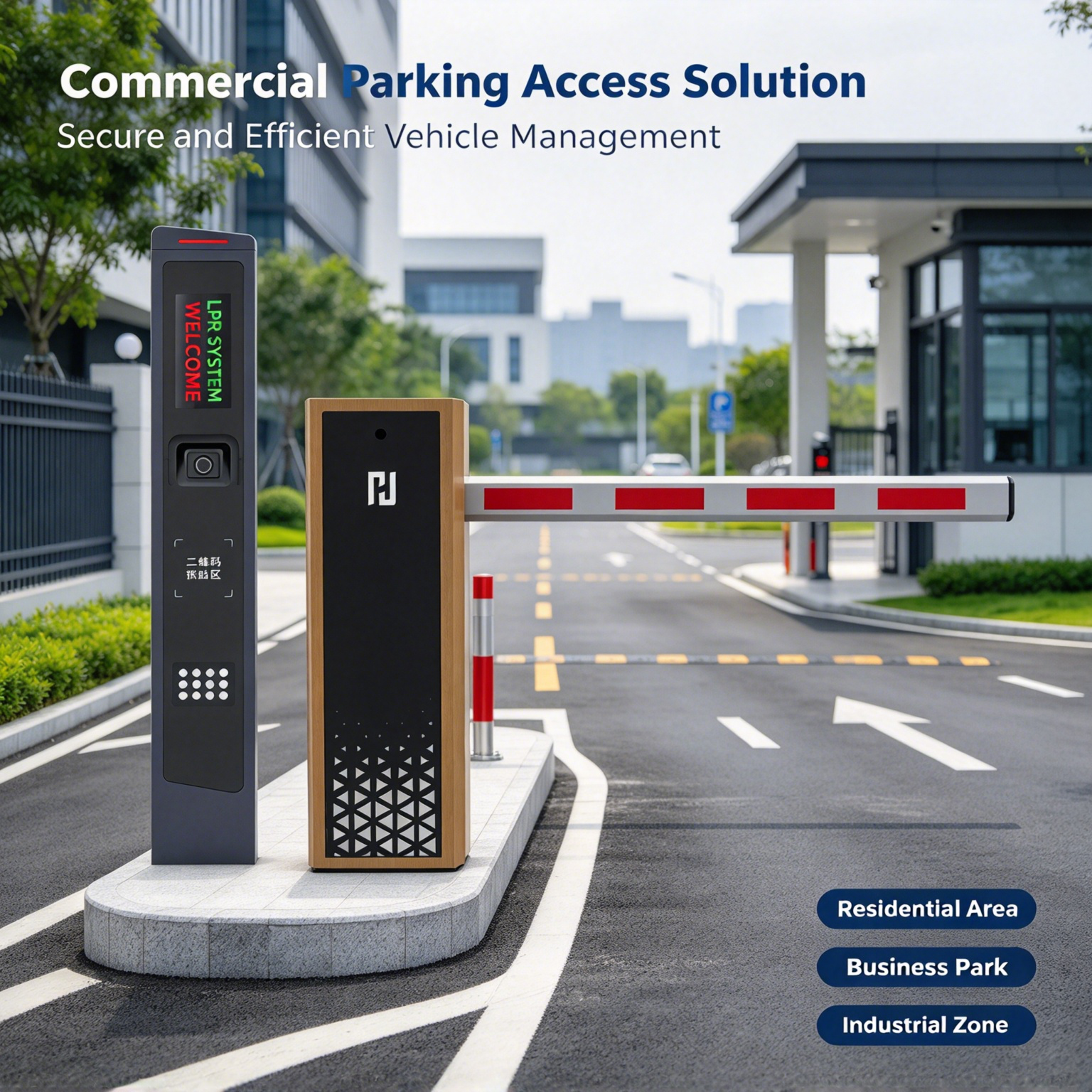
1. Measure where time is being lost
Before buying new equipment, record the time between vehicle arrival, identification, authorization, barrier opening and the vehicle leaving the lane. Take measurements at peak and off-peak times, including weekdays, weekends and special events.
Separate the queue caused by excess demand from the queue caused by process failures. If most of the delay occurs at payment, at the registration lookup or at the attendant's intervention, replacing only the barrier gate may achieve little.
2. Eliminate unnecessary steps in access control
Map each step of entry: approach, credential reading, validation, opening, passage and closing. Remove duplicate records and manual decisions that can be safely automated, without eliminating the verification required for visitors, unregistered vehicles or exceptional situations.
Define clear rules for authorized vehicles, visitors, delivery drivers, service providers and vehicles with pending registration. Inconsistent instructions to drivers increase decision time and can block the lane.
3. Consider LPR/ANPR for ticketless access
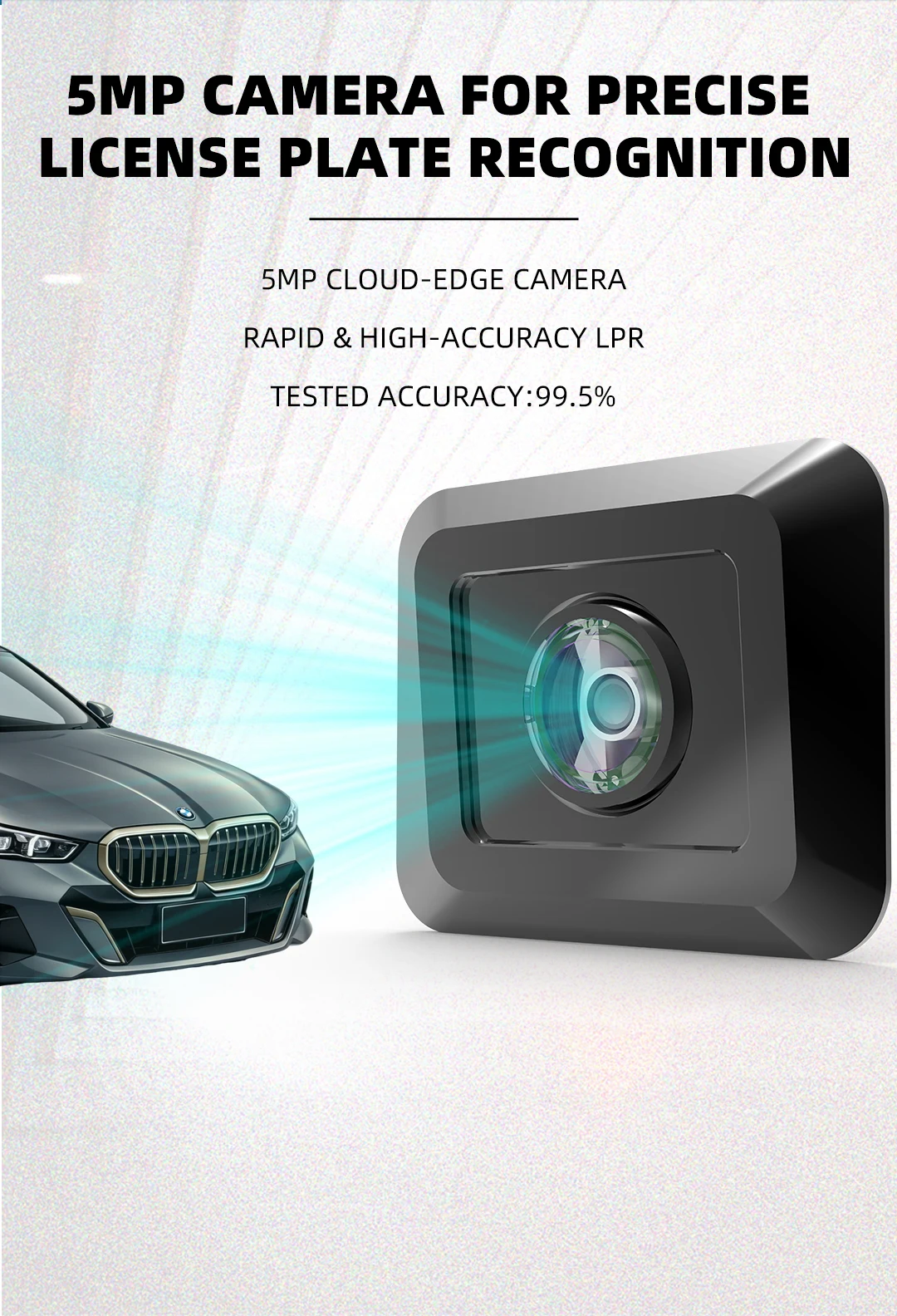
Automatic license plate reading can reduce the need for cards, tickets or operator intervention in suitable scenarios. The camera captures the plate, the system checks the authorized list or the billing rule and sends the decision to the barrier controller. Real-world performance depends on positioning, lighting, approach speed, plate cleanliness, software configuration and compatibility with the Brazilian plate format.
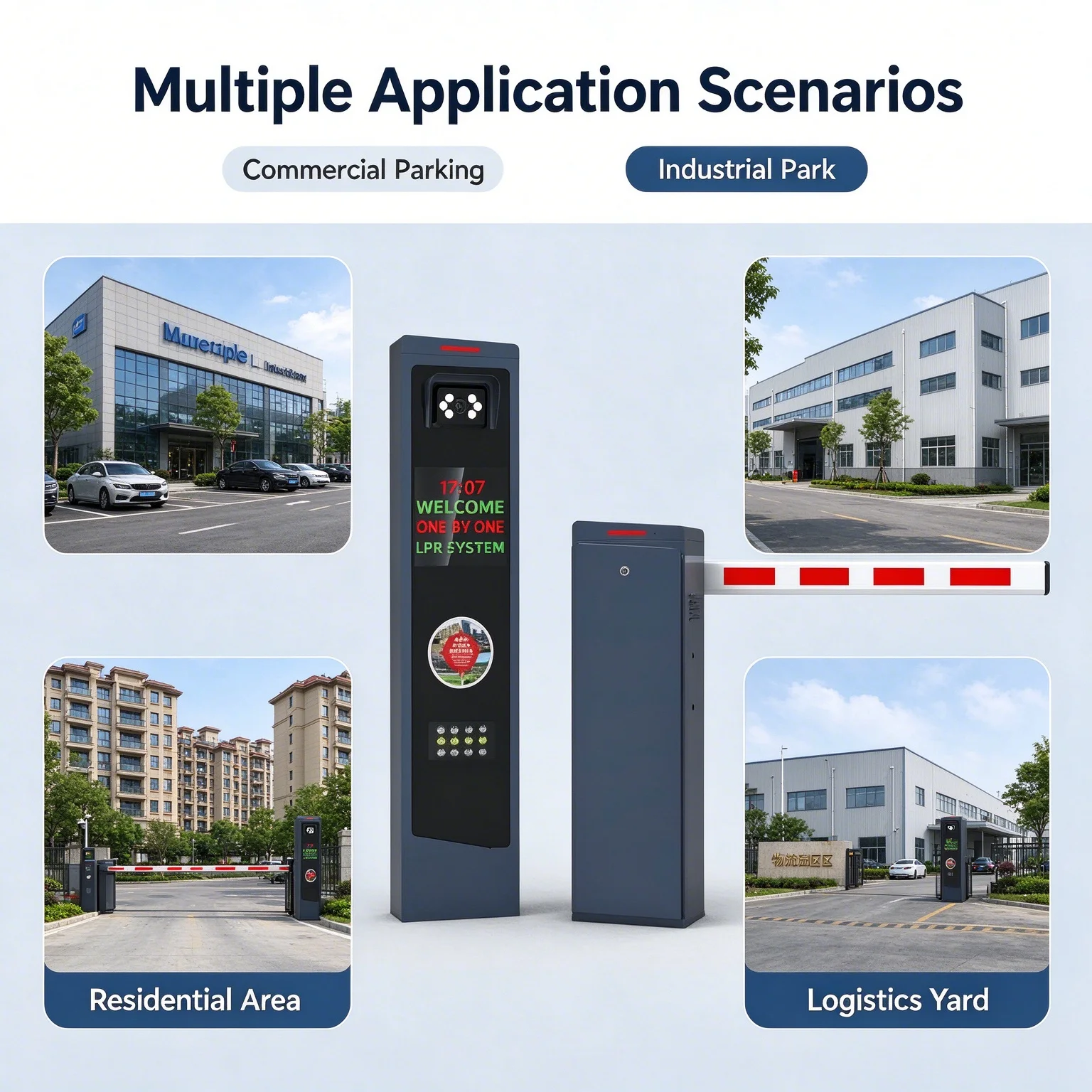
Image for review: solution related to license plate reading. Confirm the model and compatibility with Brazilian plates before publishing.
Do not promise perfect recognition under any condition. Test vehicles of different colors, motorcycles if they are permitted, dirty or tilted plates, direct sunlight, rain and nighttime. Create an exception procedure for unrecognized reads, without letting the queue depend on a single person or a single camera.
4. Assess RFID for recurring vehicles
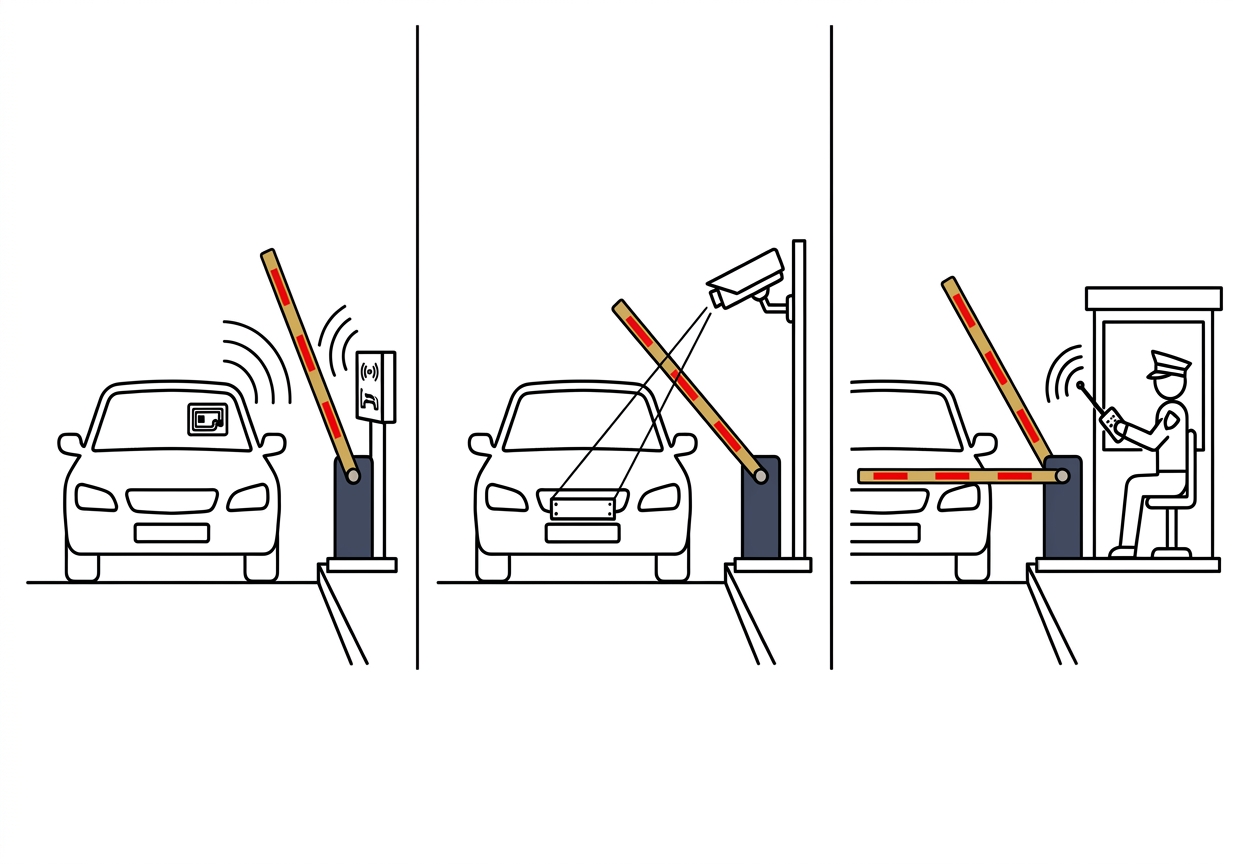
In condominiums, companies or parking facilities with many recurring users, RFID can speed up identification through an authorized tag or credential. It is important to define the reader position, the effective distance, the control of lost credentials and the handling of unauthorized vehicles.
The choice between RFID and LPR/ANPR depends on the user profile, the desired level of convenience, visitor management and total cost. In some projects, the technologies can be combined; compatibility between readers, controllers and software must be confirmed before purchase. / RFID
5. Size the barrier gate for the real flow
Opening and closing time must match the traffic volume and type. Compare the model's documented cycle, the boom length and type, the operating frequency and the need for continuous use. A fast barrier gate can help, but it does not compensate for a slow authorization process or a poorly designed lane.
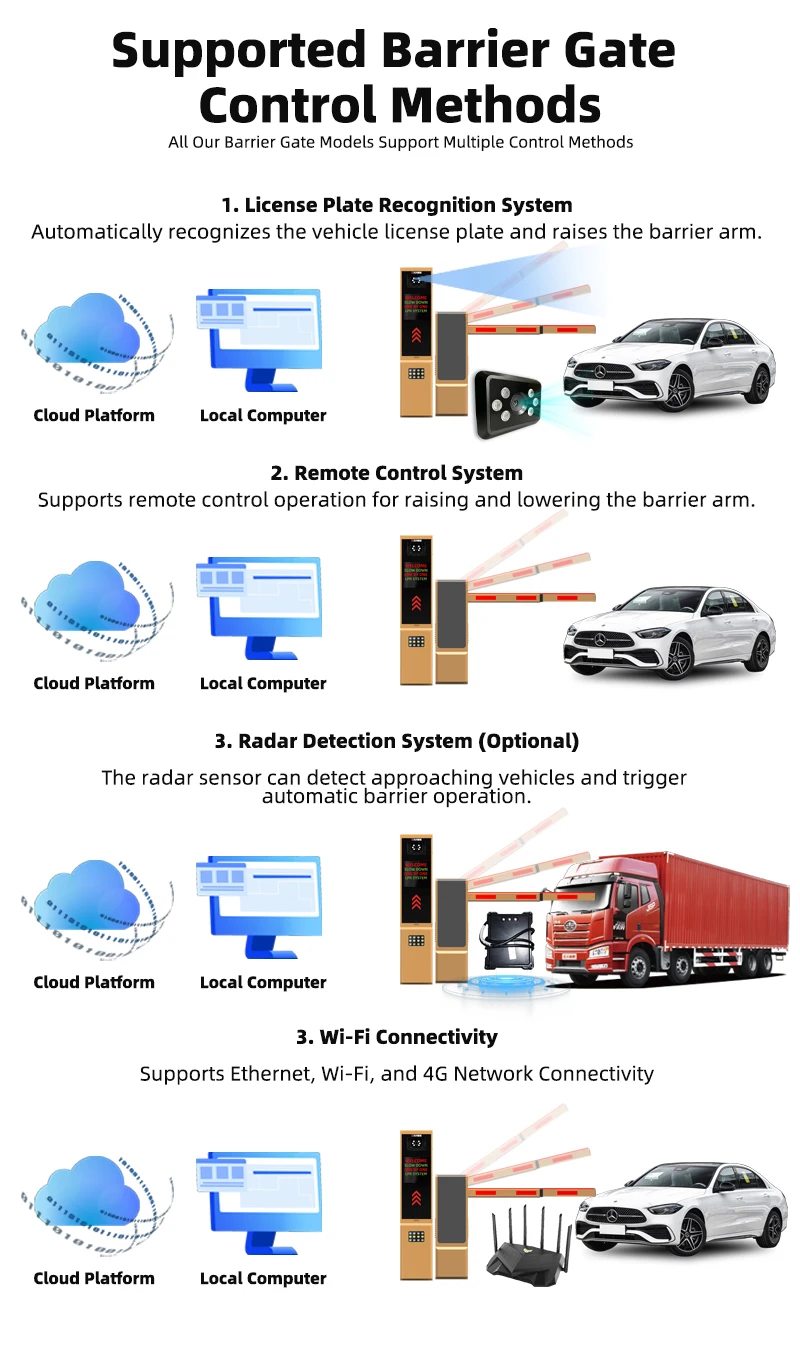
Image for review: automatic barrier gate from the Notion album. Confirm whether the illustrated model matches the context of the article.
At entrances with limited height, consider an articulated boom; for wide openings or specific applications, consider other boom configurations. The decision should account for clear width, turning radius, booth position, pedestrian circulation and the distance available to form a queue without blocking the public road.
6. Organize the lanes and the waiting area
Where the volume justifies it, separate entry and exit or create dedicated lanes for recurring users and visitors. Advance signage, legible signs, floor markings and clear instructions help drivers choose the correct lane before reaching the barrier gate.
Ensure enough space for a vehicle to wait without blocking intersections, sidewalks, emergency routes or access for other vehicles. If there is ticket validation or payment, position the equipment so that drivers can use it without risky maneuvers.
7. Use safety sensors correctly
Radar sensors, inductive loop detectors and other compatible devices can help detect vehicles in the passage zone and reduce the risk of closing on a vehicle. The sensor type and its logic must follow the design, the manufacturer's instructions and the site conditions.
Do not disable safety devices to gain speed. Carry out acceptance tests with the installer, including vehicle detection, slow passage, sensor failure and recovery after a power interruption, in accordance with the applicable procedures.
8. Prepare a plan for exceptions and failures
Define what to do when the plate is not recognized, the credential is rejected, payment is not confirmed, the network goes down or the barrier gate does not respond. A well-defined fallback procedure prevents a single problem from paralyzing the entire entrance and maintains security control.
Consider remote support, event logging, communication with the operator and availability of critical parts. Where there is high-demand operation, combine preventive maintenance with analysis of recurring failures and peak hours.
9. Track indicators after deployment
Measure the average time and the high-delay percentile for entry, vehicles served per hour, unrecognized read rate, number of manual interventions, failures per period and recovery time. Compare the results with the baseline measured before the changes.
Use the data to adjust camera positions, signage, authorization rules, controller timings and lane allocation. Do not announce a percentage reduction in queues without comparable, documented measurements.
10. How BAROXON can be part of the solution
The BAROXON line includes categories of automatic and high-speed barrier gates, LPR/ANPR systems, RFID solutions, radar sensors and access control accessories. To choose the correct configuration, provide the peak flow, the lane width, the user profile, the identification method, the safety requirements and the existing systems. Confirm the availability and compatibility of each component in the current technical proposal. / BAROXON
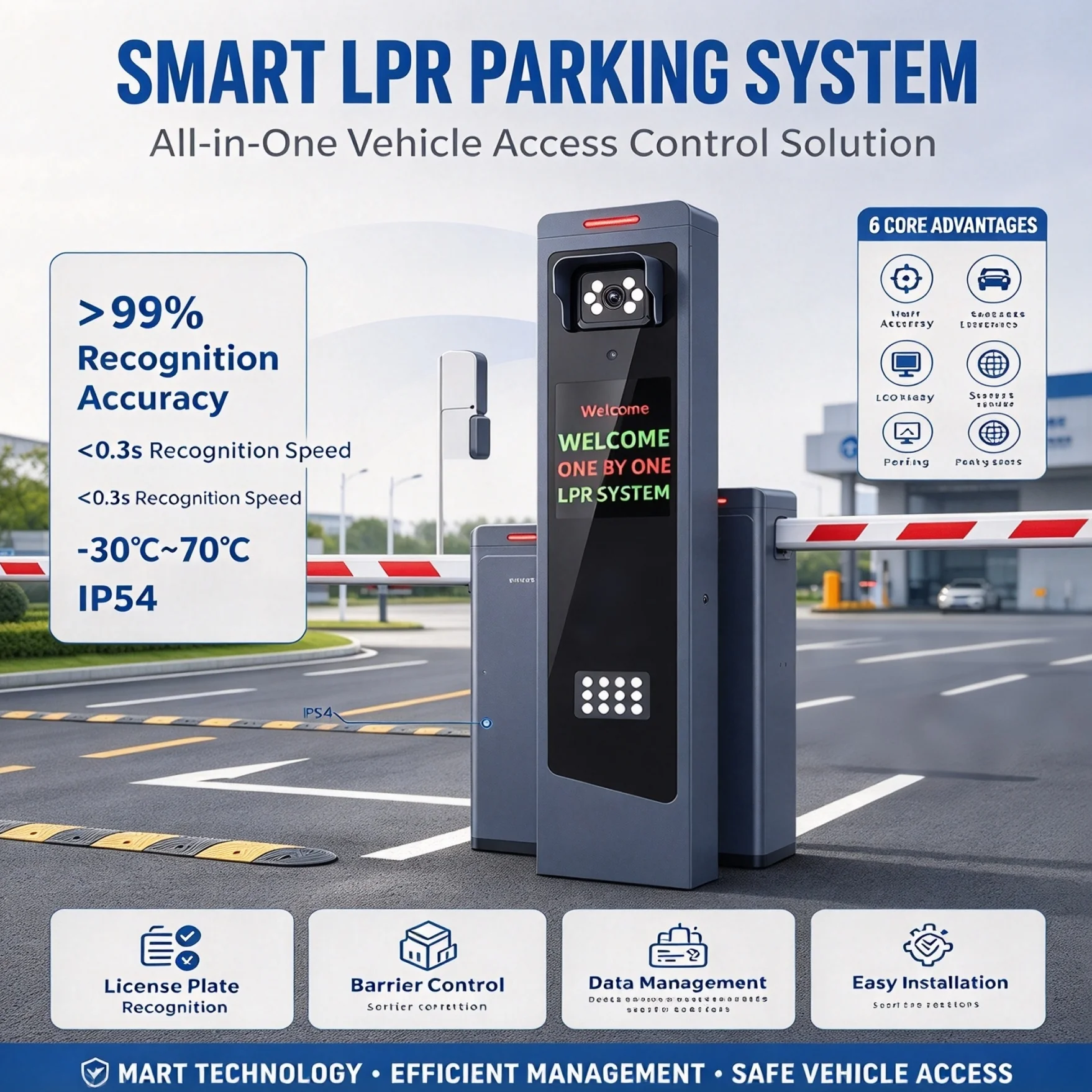
Image for review: product image from the Notion album. Confirm the equipment identification before associating it with a specific function.
The best solution usually combines suitable equipment, a simple operating flow, correctly configured sensors, signage and continuous monitoring. A process audit before purchase helps invest in the real bottleneck instead of replacing components that are not causing the queue.
Frequently asked questions
Does a faster barrier gate always reduce the queue?
No. It only reduces the portion of time taken up by boom movement. If identification, billing, validation or lane organization is slow, total time can remain high.
Is LPR/ANPR suitable for every parking facility?
It depends on the lighting, the camera position, the plate quality, the traffic flow, the access rules and the integration with the software. The solution must be tested on site and a fallback procedure must be provided.
Is RFID better than license plate reading?
No technology is universally better. RFID can work well for recurring users with credentials; LPR/ANPR can facilitate ticketless or tagless access. The choice depends on the scenario and may include both, provided the integration is validated.
How can I tell whether the queue is improving?
Compare measurements taken under similar conditions: time of day, vehicle volume, payment method and access rules. Track passage time, manual interventions, failures and system recovery.
Is it safe to fully automate the entrance?
Automation must be designed with access control, presence detection, exception handling and a failure procedure. The right configuration depends on the site and must be validated by the professionals responsible for the project and installation.