
How to Choose the Right Automatic Barrier
Choosing the right automatic barrier gate requires more than comparing prices or opening speeds. The equipment must be compatible with the passage width, traffic intensity, available space, safety requirements and the vehicle identification method. A well-sized solution can help organize access, reduce queues and integrate vehicle entry with the existing control system.
1. Start with the type of site and the control objective
Before choosing a model, define where the barrier will be installed and what the system needs to do. A condominium may prioritize identifying residents and visitors; a commercial parking lot may need to integrate the barrier with ticket issuance or billing; a factory may require control of trucks, schedules and restricted areas. List the users, vehicle types, peak hours and authorization rules to turn these needs into technical requirements.
2. Measure the lane width and the opening space
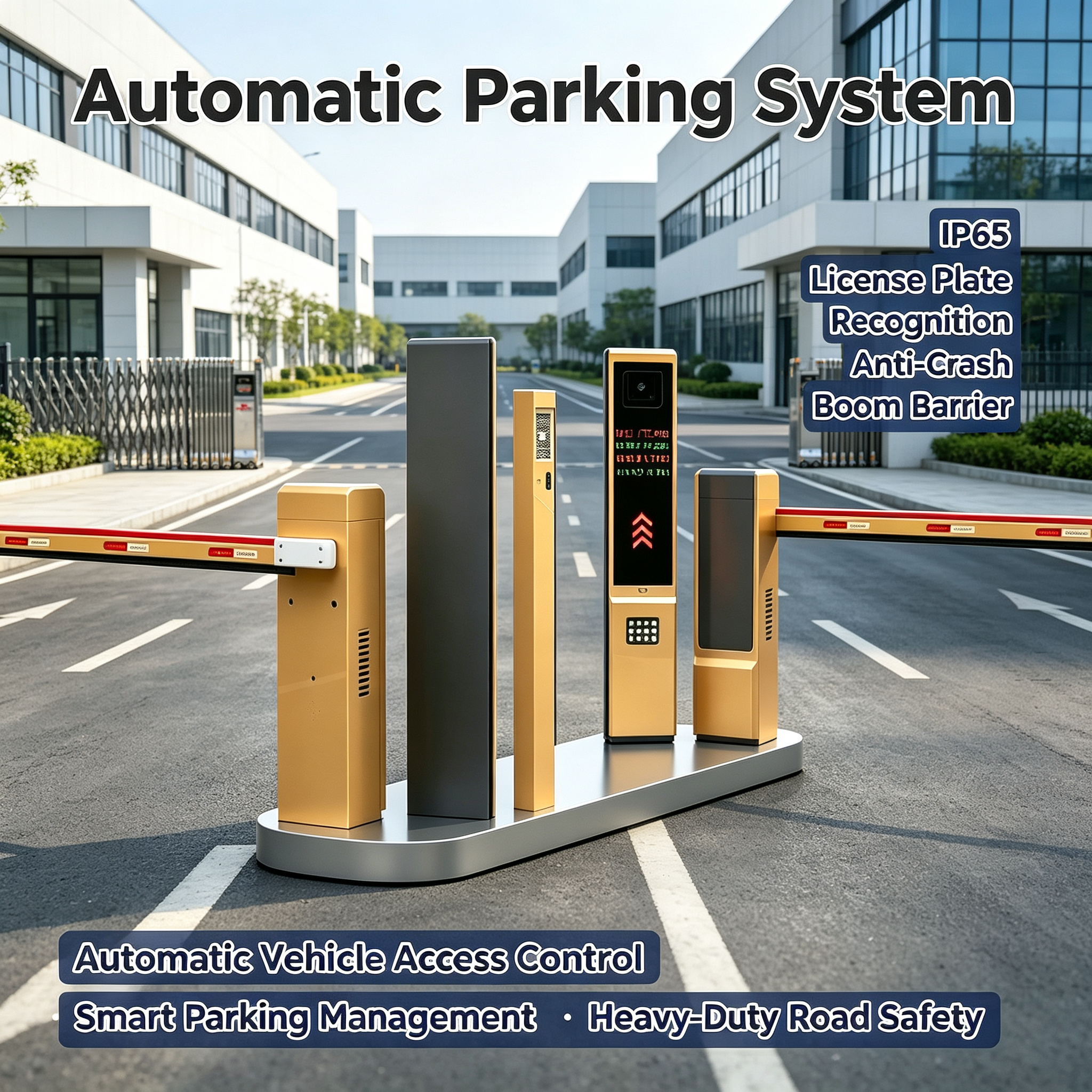
The usable passage width is one of the first figures to confirm. Measure the actual distance between obstacles and allow for wide vehicles, entrance curves, safety islands, sidewalks and the position of the cabinet. Also check for beams, low ceilings, suspended signage or pipes that could interfere with the boom movement. The boom length must be compatible with the lane and with the manufacturer's specifications.
When to choose a straight or articulated boom?
A straight boom barrier is usually suitable for accesses with sufficient vertical space and simple geometry. An articulated or folding boom can be considered where headroom is limited, such as in certain covered garages. The decision should be based on site measurements and the model's opening drawing, not just on photographs or the appearance of the equipment.
3. Calculate traffic volume and operating frequency
Estimate how many vehicles pass per hour and per day, paying attention to peak periods. A condominium entrance with moderate flow may have different needs from an industrial gatehouse or a high-turnover parking lot. Check the duty cycle specified for the model, the boom length and the opening and closing speed. Do not choose on nominal speed alone: identification, validation and the distance between vehicles also affect actual throughput.
4. Choose the identification and authorization method
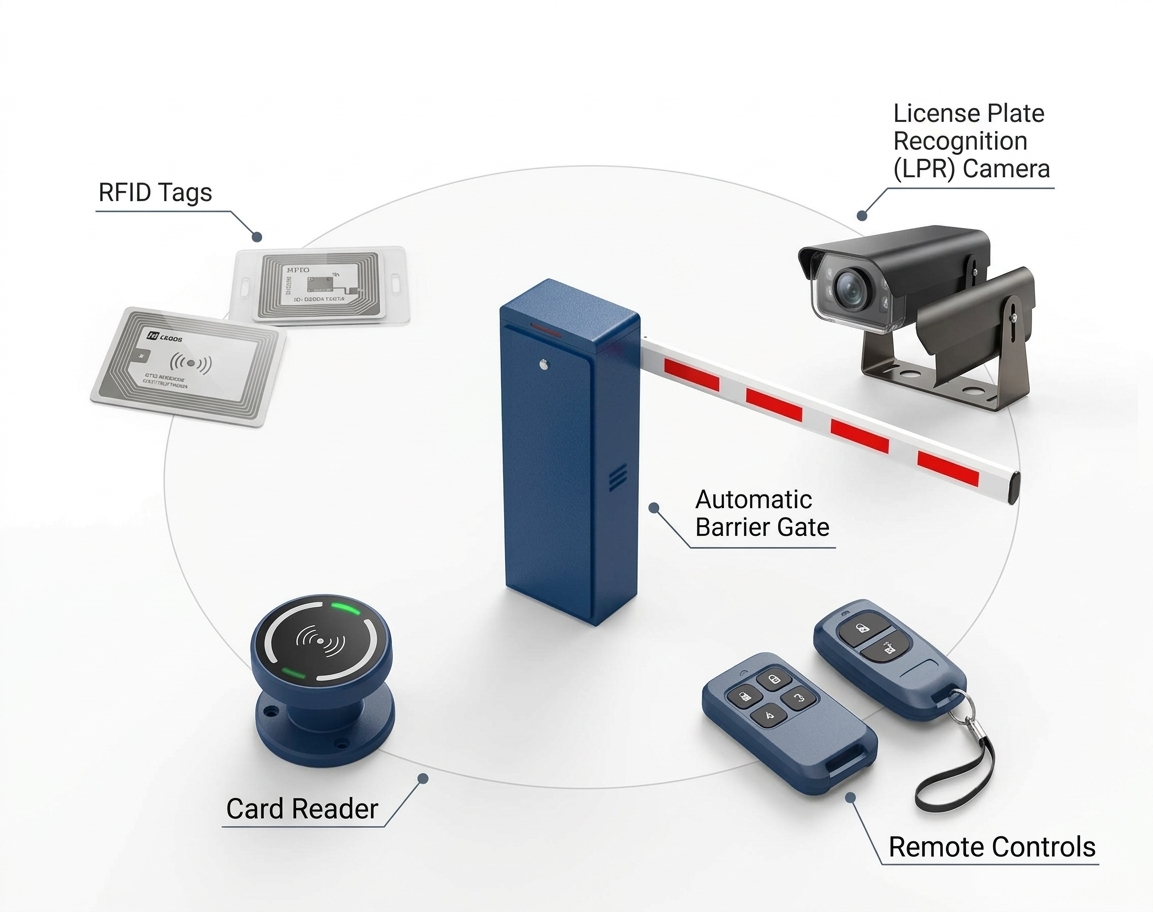
The access method should match the user profile and operating rules. The barrier can be triggered by remote control, RFID card or tag, ticket, intercom, an operator or automatic license plate recognition, provided the equipment and software are compatible. In some projects, combining two methods can provide a fallback for visitors, read failures or exceptional situations.
RFID: suited to recurring users
RFID uses cards, tags or other compatible credentials. It is a practical option when residents, employees or fleet vehicles need recurring access. When planning the installation, check the actual read range, the reader position, how lost credentials are handled and the procedure for registering or revoking permissions.
LPR/ALPR: access by license plate recognition
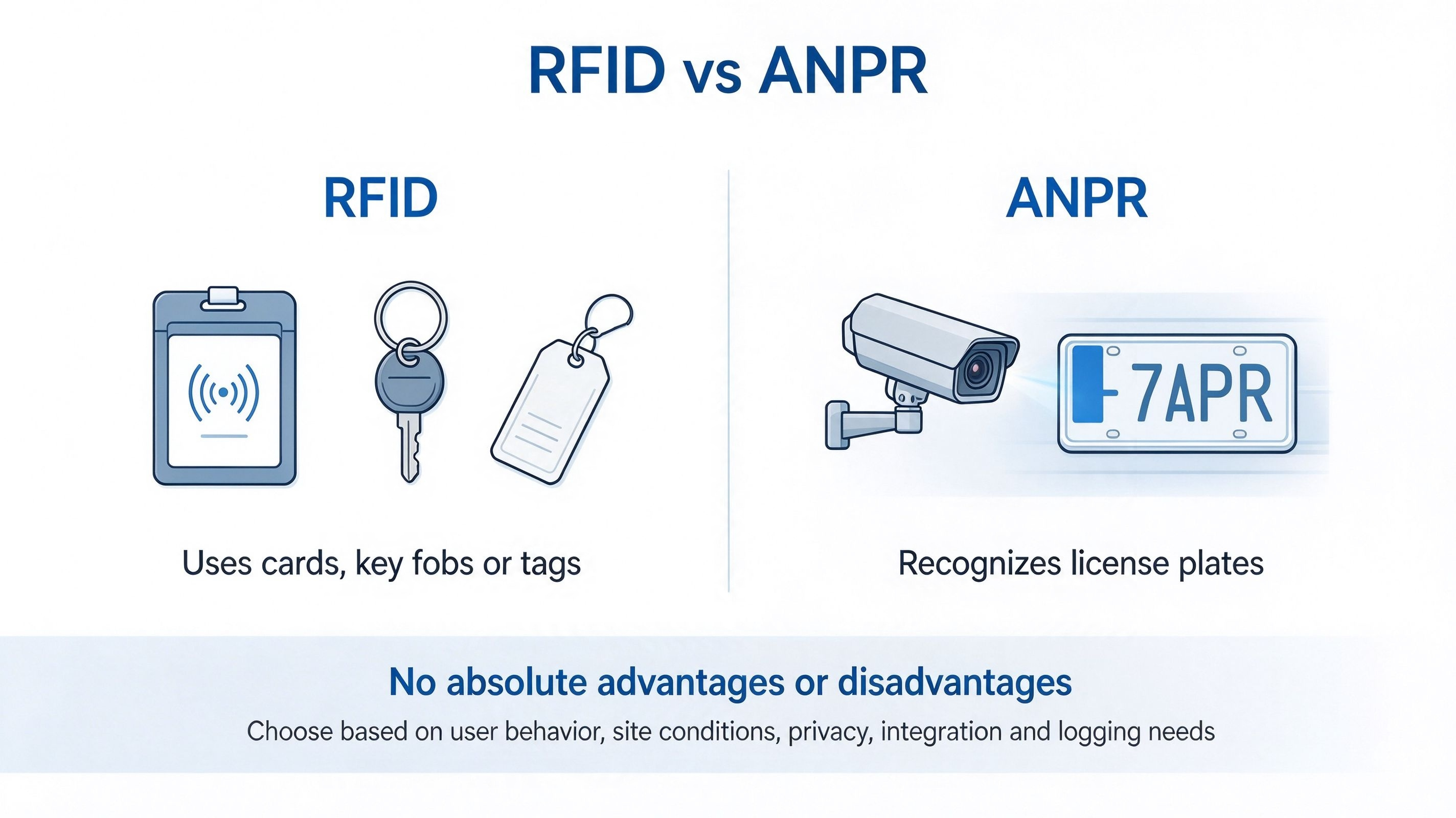
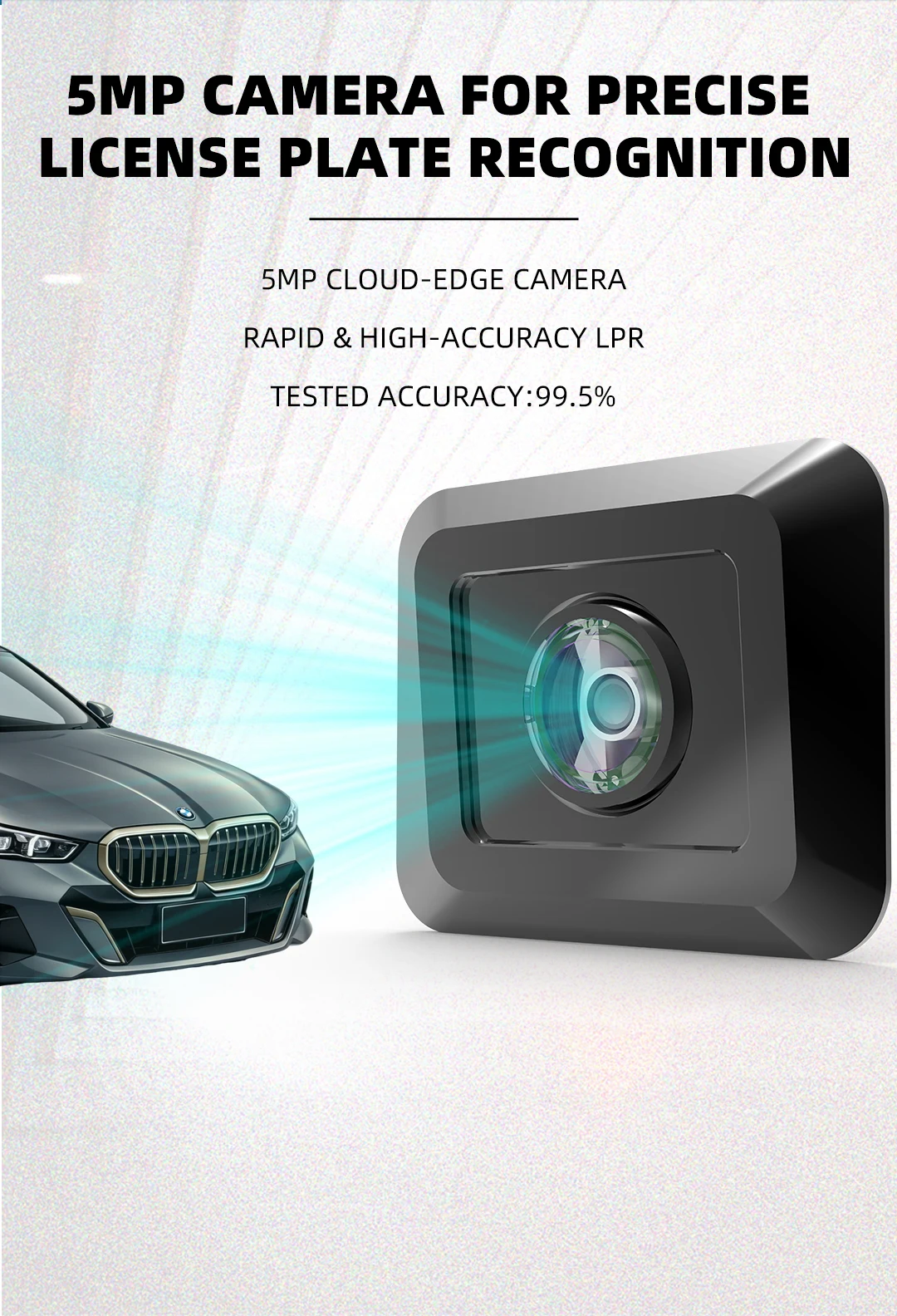
License plate recognition can allow the system to compare the plate read by the camera against an authorized list or access rules. Performance depends on the camera, lighting, installation angle, vehicle speed, plate condition and software. For a project in Brazil, expressly confirm whether the proposed solution recognizes the plate format used at the site and whether it integrates with the barrier controller and the chosen management system.
5. Do not leave safety until the end
Assess the risks for drivers, motorcyclists, cyclists and pedestrians. Check which presence sensors are compatible, such as radar or inductive loops, and whether the system provides the control logic needed to prevent closing on a vehicle. Consider warning lights, manual release, an emergency procedure and behavior in the event of a power failure. Installation, adjustment and testing should follow the manufacturer's documentation and the requirements applicable to the site.
6. Consider the installation environment
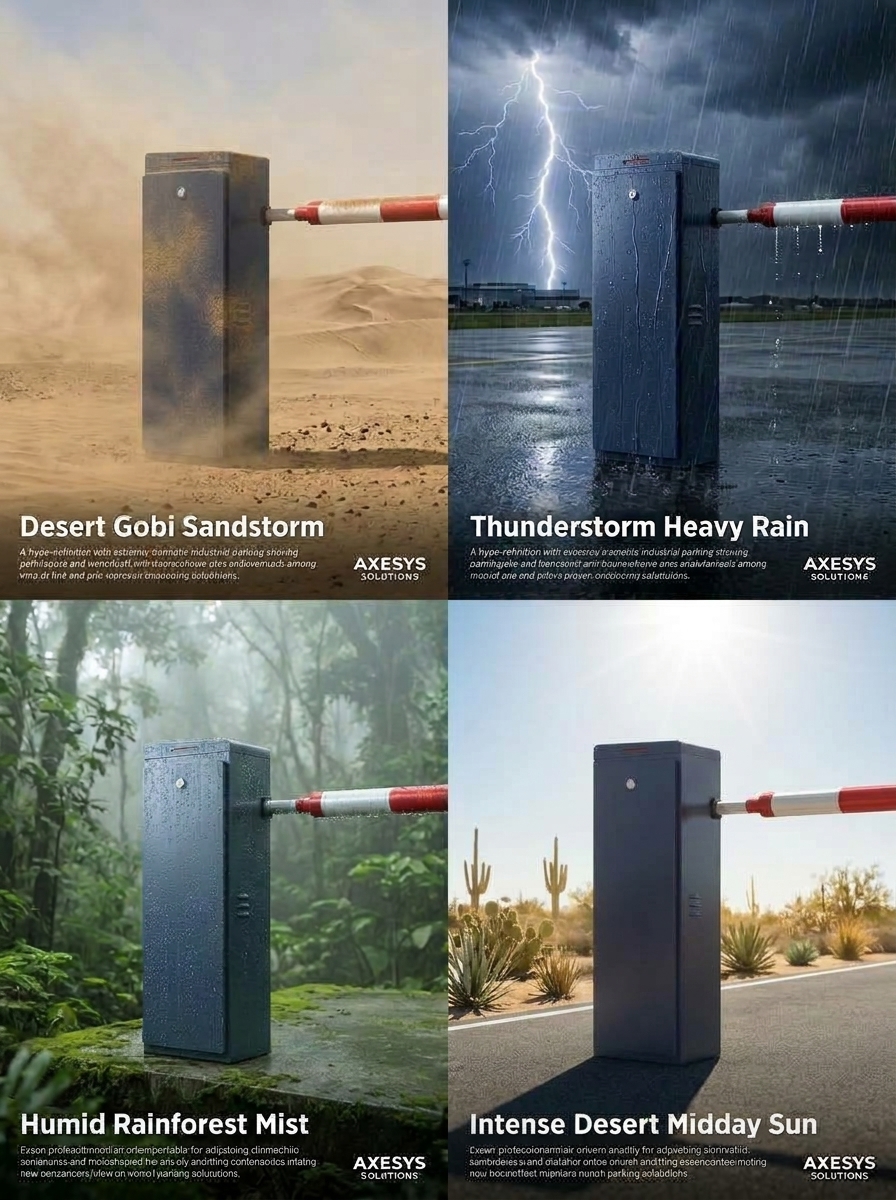
A barrier installed outdoors may face rain, dust, heat, humidity and corrosion; in industrial environments, there may also be vibration or heavy vehicle traffic. Confirm the equipment's ingress protection rating and environmental limits in the model's datasheet. Check the mounting base, drainage, cable protection and ease of access for maintenance. Do not assume that all models have the same environmental resistance.
7. Confirm compatibility with existing systems
If the site already uses parking software, access control, cameras or a security platform, confirm the interfaces before purchase. Ask the supplier which protocols, inputs and outputs, network options and integrations are supported by the specific model. Also define who will be responsible for configuration, communication testing, user management and post-installation support.
8. Evaluate maintenance, spare parts and technical support
A well-planned purchase considers the entire lifecycle of the equipment. Request the installation and maintenance manual, the spare parts list, the recommended inspection intervals, the warranty terms and the support channels. Ask how to perform manual release in an emergency and which checks should be carried out after a fault. For critical accesses, assess the impact of downtime and prepare an alternative operating procedure.
9. Compare proposals using the same criteria
To compare suppliers, send the same data to all of them: lane width, vehicle volume, boom type, environment, authorization method, sensors, integrations and power conditions. Ask each proposal to identify the exact model, the accessories included, the operating limits, the warranty and the items not covered by the supply. This way, the comparison no longer depends only on the initial price and starts to consider technical suitability and maintenance cost.
10. How to evaluate a BAROXON solution
When analyzing a BAROXON solution for the project, start with the categories and specifications actually published in the catalog at [baroxonlpr.com](http://baroxonlpr.com). Check whether there is a barrier suited to the lane width and the expected cycle volume; then confirm the safety accessories and access control options required. If the project uses LPR/ALPR or RFID, request technical confirmation of compatibility between reader, software, controller and barrier. Do not treat an integration as guaranteed until it has been confirmed for the proposed models and configuration.
To speed up the evaluation, send the sales or technical team: lane width, estimated number of vehicles per day, type of site, available vertical space, authorization method, environmental conditions and systems already installed.
Frequently asked questions
What is the best automatic barrier gate for a condominium?
The best option depends on the flow of residents and visitors, the entrance width, the opening space and the identification method. RFID can be convenient for residents, while visitors may need an intercom or temporary authorization. Sizing should include sensors and safety procedures suited to the site.
Should I choose a high-speed barrier gate?
Consider a high-speed option where there is high flow or frequent queues, but confirm whether the model supports the expected duty cycle and whether the identification system can keep up with the passage. Speed alone does not solve bottlenecks caused by slow validation, insufficient space or poorly configured access rules.
Can I integrate the barrier with a license plate recognition system?
Yes, provided the camera, software, controller and barrier are compatible. Confirm support for the Brazilian plate format, the available interfaces, how permissions are validated and the procedure for cases where the plate is not recognized.
What information should I send to the supplier to request a quotation?
Provide the lane width, the number of vehicles per hour or per day, the type of installation, the clear height, the authorization method, the desired sensors, the required integrations and the environmental conditions. Photos and a simple drawing of the access can also help the technical team assess the space.
Conclusion
The ideal automatic barrier gate is the one sized for the real conditions of the access, not necessarily the fastest or the cheapest. Evaluate space, traffic, safety, identification method, environment, integration and maintenance together. Use these criteria to compare models and request technical confirmation of specifications and compatibilities before finalizing the project with BAROXON or any supplier.