
How Does an Automatic Barrier System Work?
What is an automatic barrier gate system?
An automatic barrier gate system for parking controls the passage of vehicles through a motorized physical barrier and an authorization process. When a valid credential or command is received, the controller activates the mechanism to raise the boom; after the vehicle has passed, the system commands closing according to the installed configuration. The barrier can operate on its own or be part of an integrated vehicle access control solution.
The system can be used in commercial parking lots, residential condominiums, corporate buildings, hospitals, logistics centers and industrial facilities. The appropriate configuration depends on traffic volume, passage width, the environment and the site's access rules.
What are the components of a barrier system?
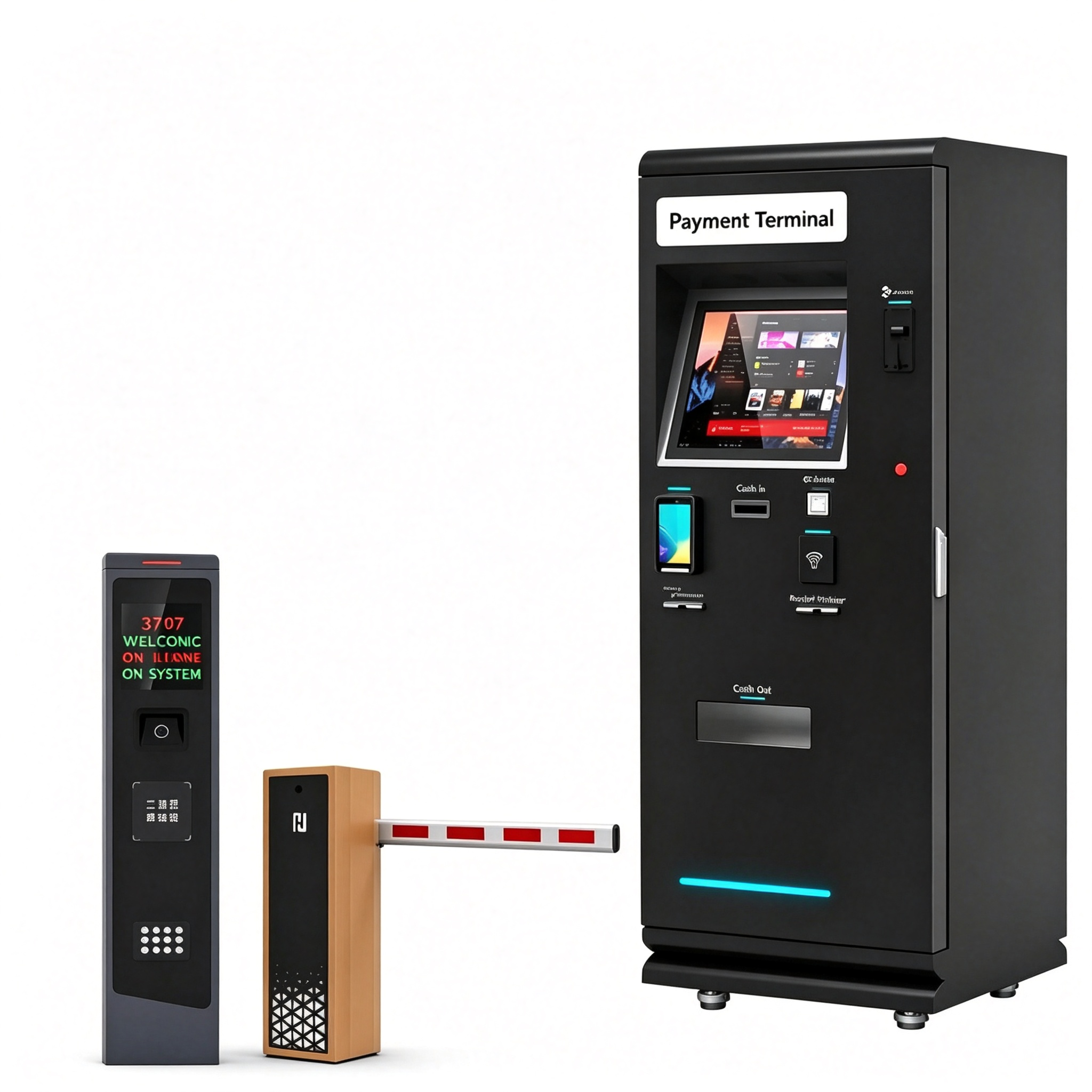
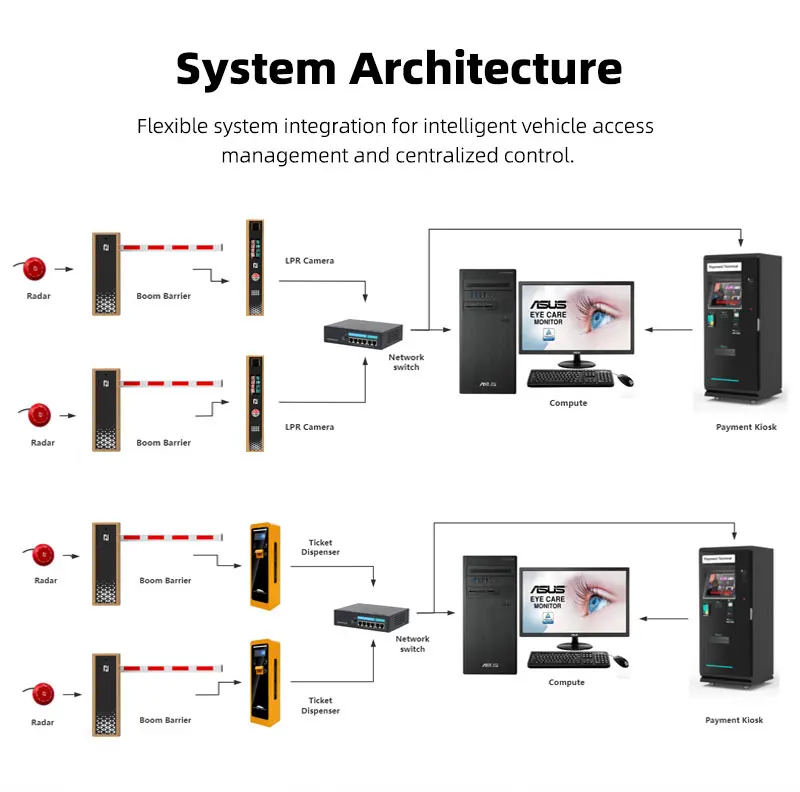
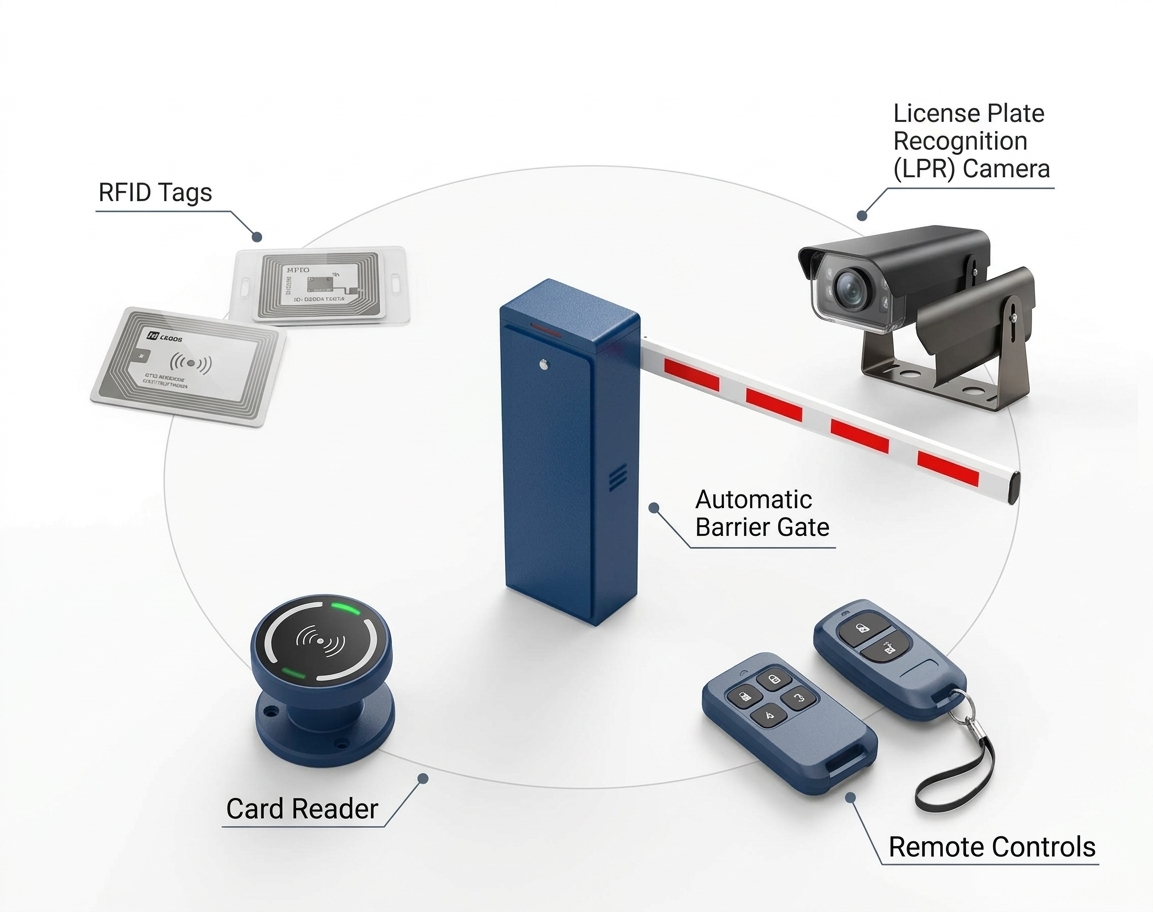
In a typical installation, the main elements are the motorized unit, the barrier boom, the electronic controller and a device that sends the opening command. Depending on the project, RFID readers, intercom, payment terminal, license plate recognition camera, presence sensors, inductive loop, photocells and warning lights may be added. Not all accessories are included in all models; confirm compatibility in the documentation for the chosen product.
How does the opening and closing cycle work?
1. The vehicle arrives at the entrance
The vehicle approaches the barrier and stops at the position indicated by the signage. The access system waits for a credential, a plate read, a ticket or an operator command, depending on the installed solution. The stopping position and signage should help the driver identify where to wait without blocking the road.
2. The system checks authorization
The controller or access software verifies whether the credential or plate meets the configured rules. In a parking lot, these rules may take into account registration, permission, time, payment or ticket validity. The exact method depends on the integrated system; therefore, confirm which devices and functions are actually compatible with the barrier and the controller.
3. The barrier receives the opening command
Once access is authorized, the controller sends a command to the barrier mechanism. The motor moves the boom to the open position. Opening time depends on the model, boom length, configuration and operating conditions; use the datasheet to compare models instead of assuming a standard speed for all of them.
4. The vehicle crosses the lane
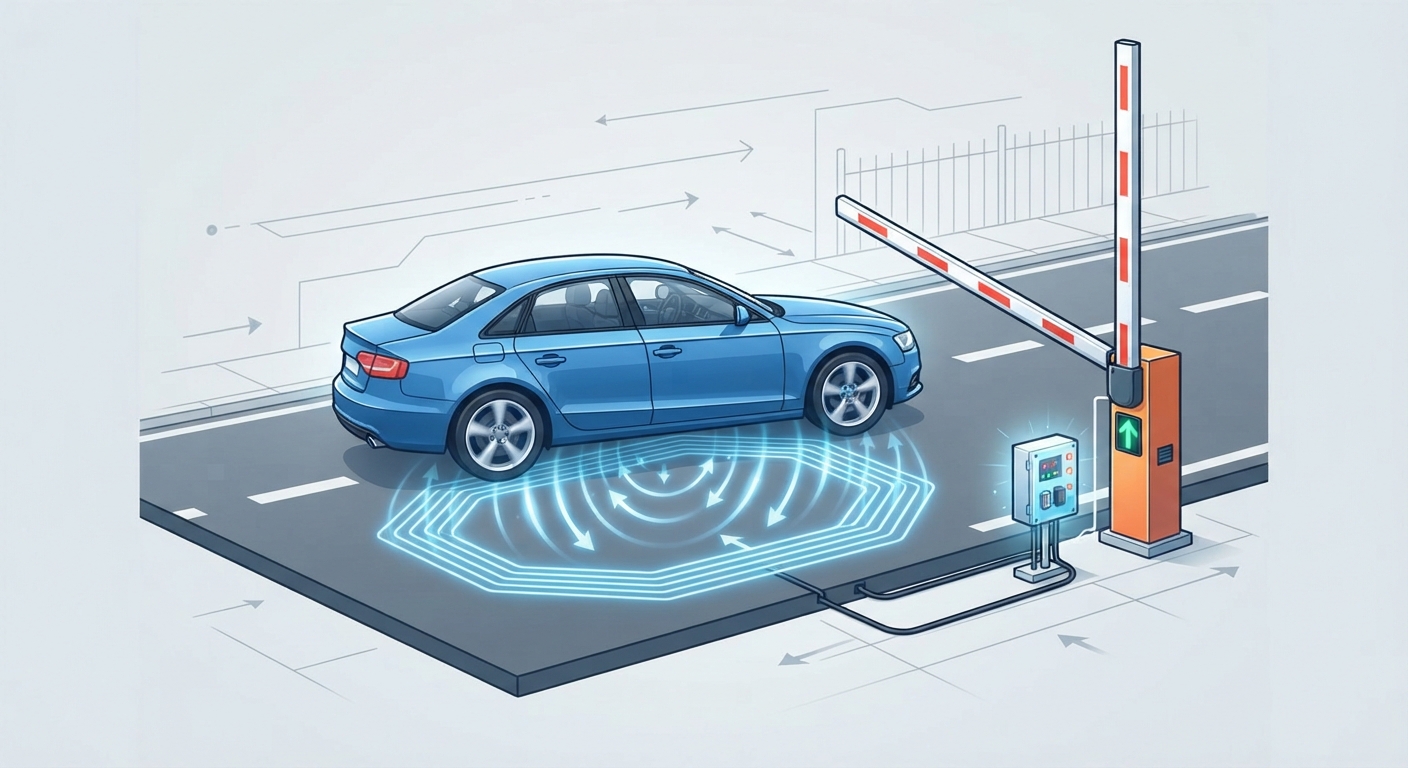
With the boom raised, the vehicle passes through the access lane. Presence sensors, inductive loops or other compatible devices can inform the system that a vehicle is in the passage zone. The detection logic must be designed and tested for the site's real conditions, including vehicle positioning, motorcycles and other relevant traffic types.
5. The system commands closing
When the configured conditions indicate that the passage is clear and the cycle can be completed, the system commands the boom to return to the closed position. The sensors and safety logic must work according to the design, to reduce the risk of closing on a vehicle. The exact behavior in the event of a fault, power interruption or contradictory signal must be confirmed in the model manual and validated during commissioning.
Which methods can authorize opening?
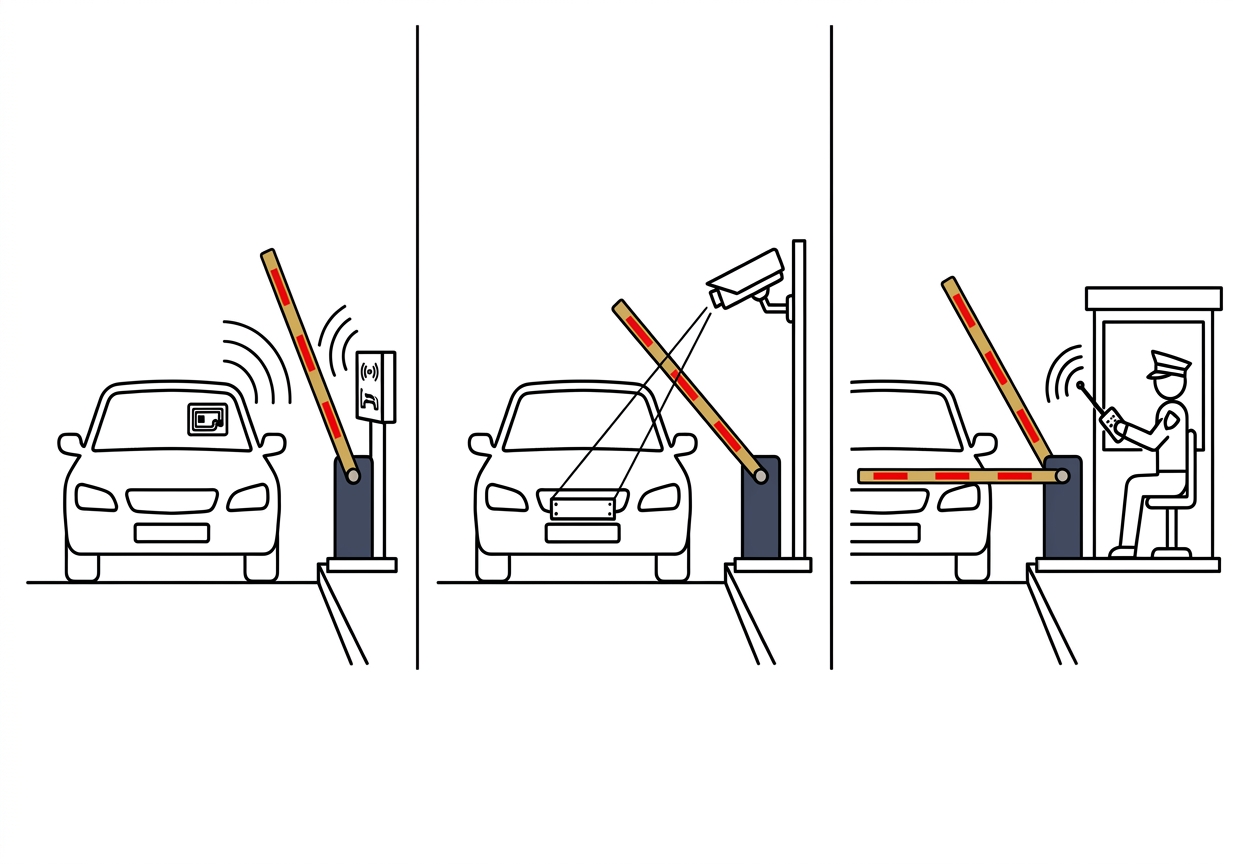
Remote control, push button or operator
A remote control, command button or attended station can send the opening request. This configuration may suit sites with assisted operation or simple access rules. It is important to define who can operate the system, how commands are protected and which procedure must be followed when access needs to be released manually.
RFID card or tag
With RFID, a reader identifies a compatible card or tag and sends the result to the control system. It is a common option for recurring users such as residents, employees or registered fleets. Before installation, confirm the compatibility of the reader and credentials, the read range at the site and how to add, suspend or revoke permissions.
Automatic license plate recognition (LPR/ANPR)
A camera and license plate recognition software can compare the captured plate against an authorized list or access rules. If the result is validated and the integration is correctly configured, the system can request the barrier to open. Performance depends on the camera, lighting, angle, vehicle speed, plate condition, software and network. For projects in Brazil, expressly confirm support for the plate format used at the site.
Ticket, payment or intercom
In paid parking lots, the flow may include issuing or validating a ticket and confirming payment before exit. In condominiums and companies, the intercom can allow an authorized person to confirm a visitor's entry. These functions depend on third-party software and equipment integrated into the system; validate the requirements and interfaces before specifying the solution.
How do sensors contribute to safety?
Sensors can detect the presence of a vehicle or indicate that the passage area is not yet clear. Depending on the project, inductive loops, photocells, radars or other compatible devices may be used. Selection and positioning should consider the lane width, the vehicle type, pedestrian circulation and environmental conditions. The installation must be tested by qualified professionals; the presence of a sensor alone does not guarantee that every risk has been eliminated.
It is also necessary to define signage, manual release, the procedure in the event of a power failure and the inspection routine. Follow the manufacturer's instructions and the safety requirements applicable to the installation.
How does the system help organize vehicle flow?
When authorization, opening and detection work in coordination, an automatic barrier gate can help standardize access and reduce the need for manual intervention. However, total service time also depends on identification speed, permission validation, waiting space and driver behavior. For sites with queues, analyze the entire process rather than assessing only the boom movement time.
How to choose an automatic barrier gate system?
- Measure the lane and the opening space. Check the usable width, the headroom and obstacles near the boom.
- Estimate the traffic volume. Consider vehicles per hour, peak periods and the expected operating frequency.
- Choose the authorization method. Evaluate remote control, RFID, ticket, intercom or LPR, according to needs and compatibility.
- Define the safety requirements. Specify sensors, signage, emergency procedures and the necessary tests.
- Check the environment. Confirm the conditions for rain, dust, heat, humidity and power supply.
- Plan the integration. Confirm the interfaces with existing parking software, cameras and access control.
- Consider support and maintenance. Request the datasheet, manual, warranty terms and parts availability.
How to evaluate a BAROXON solution?
Consider the models and categories actually presented in BAROXON's official catalog for the Brazilian market. Compare the boom length, the duty rating, the control interfaces and the safety accessories described in the datasheet for the specific model. If the project requires RFID, LPR/ANPR or integration with parking software, request technical confirmation of compatibility between all components before purchase. Do not assume that a feature or accessory is available on all models.
Frequently asked questions
Does the automatic barrier gate open by itself when a vehicle approaches?
Not necessarily. Opening depends on the authorization method and the installed configuration. A system may require RFID, plate reading, a ticket, an operator command or another valid signal. Presence sensors alone do not necessarily mean that the vehicle is authorized.
Can the barrier work with license plate recognition?
It can, provided the camera, software, controller and barrier are compatible and correctly configured. Confirm support for the Brazilian plate format and test the system under real lighting and traffic conditions.
What happens when there is a power failure?
The behavior depends on the model, the accessories and the emergency procedure planned for the installation. Consult the manual to learn the correct way to release manually and define clear instructions for operators. Do not assume that all models have the same emergency mechanism.
Does an automatic barrier gate eliminate queues?
It can help organize the passage, but it does not necessarily eliminate queues. The result depends on identification and authorization time, traffic volume, waiting space, access rules and equipment speed.
Conclusion
An automatic barrier gate system works by coordinating access authorization, boom movement, vehicle detection and closing. Reliability depends on model selection, compatibility between components, installation, testing and maintenance. For a BAROXON project, use the official specifications for the selected model and confirm all features and integrations before defining the final configuration.