
Buying a Heavy-Duty Vehicle Barrier
What is a heavy-duty vehicle barrier?
A heavy-duty vehicle barrier is an access control solution designed for sites where the equipment must operate frequently or handle more demanding usage conditions. The choice should not be based only on the appearance of the structure or on the commercial label "heavy-duty": it is essential to confirm the operating capacity, permitted dimensions, installation conditions and maintenance requirements in the model's datasheet.
This type of equipment can be considered for commercial parking lots, high-traffic condominiums, business centers, logistics areas, industrial facilities and fleet entrances. However, not every high-traffic site requires the same product: the right solution depends on vehicle volume, usage pattern, available space and the access control system.
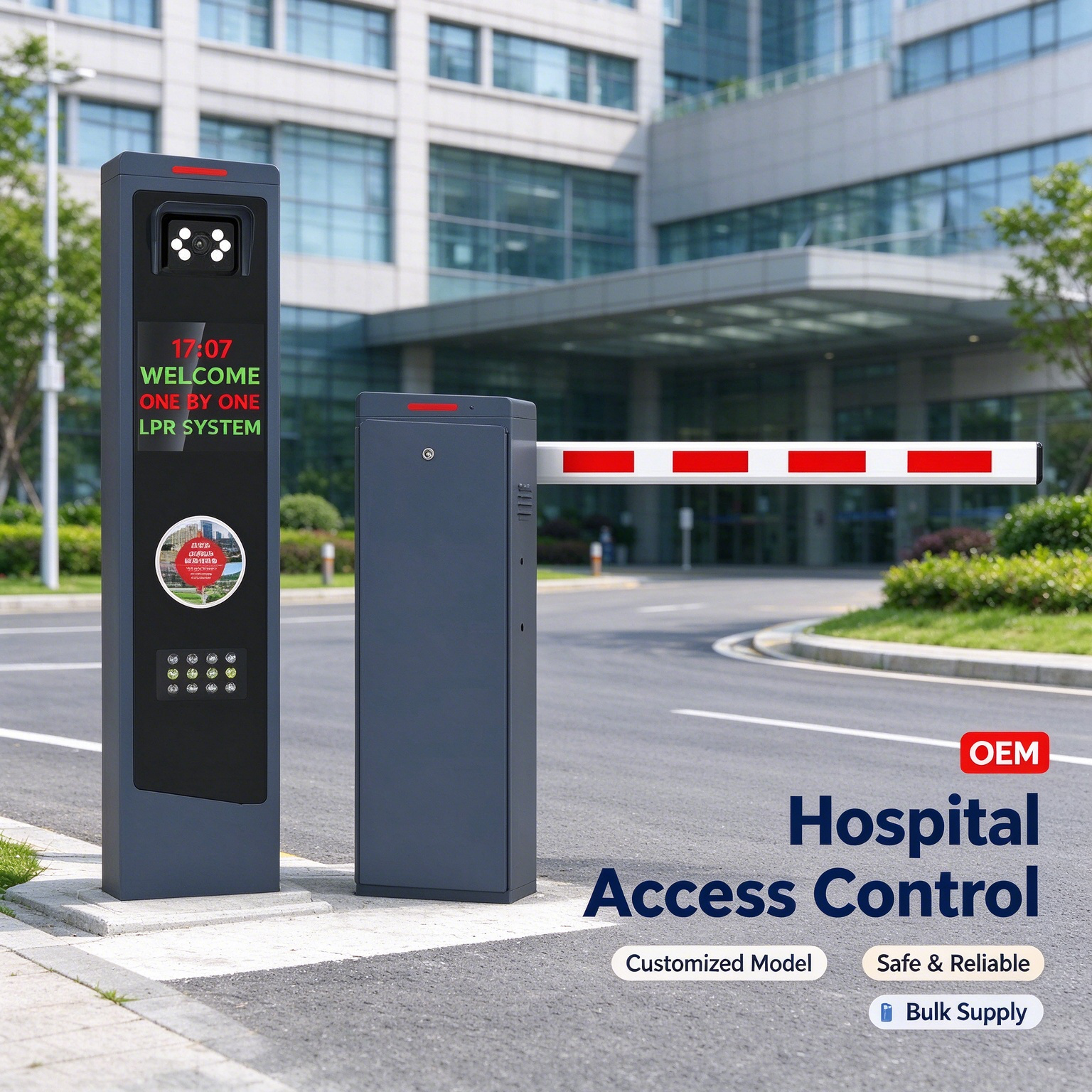
1. Assess traffic volume and the operating cycle
Before choosing a model, estimate how many vehicles pass through the entrance at normal times and during peak periods. Also consider how many times the barrier will need to open and close per hour and per day. The duty rating stated by the manufacturer must be compatible with this demand; do not use lane width or nominal speed alone as selection criteria.
At sites with recurring queues, assess the entire process: vehicle identification, authorization validation, opening time, passage, detection and closing. A faster barrier does not solve congestion on its own if plate reading is slow, the payment system takes time or the waiting area is insufficient.
2. Confirm the boom length and the passage width
Measure the usable lane width and check for traffic islands, guard booths, poles, walls or other obstacles nearby. The boom must cover the intended passage without interfering with structures and without creating risks for vehicles or pedestrians. Confirm the maximum length permitted for the specific model and follow the manufacturer's instructions on installation and balancing.
Do not extend the boom or modify components on your own to cover a wider lane. A configuration outside the specifications can affect performance, durability and safety. When the passage is wide or has an unusual geometry, request a technical recommendation based on the actual site measurements.
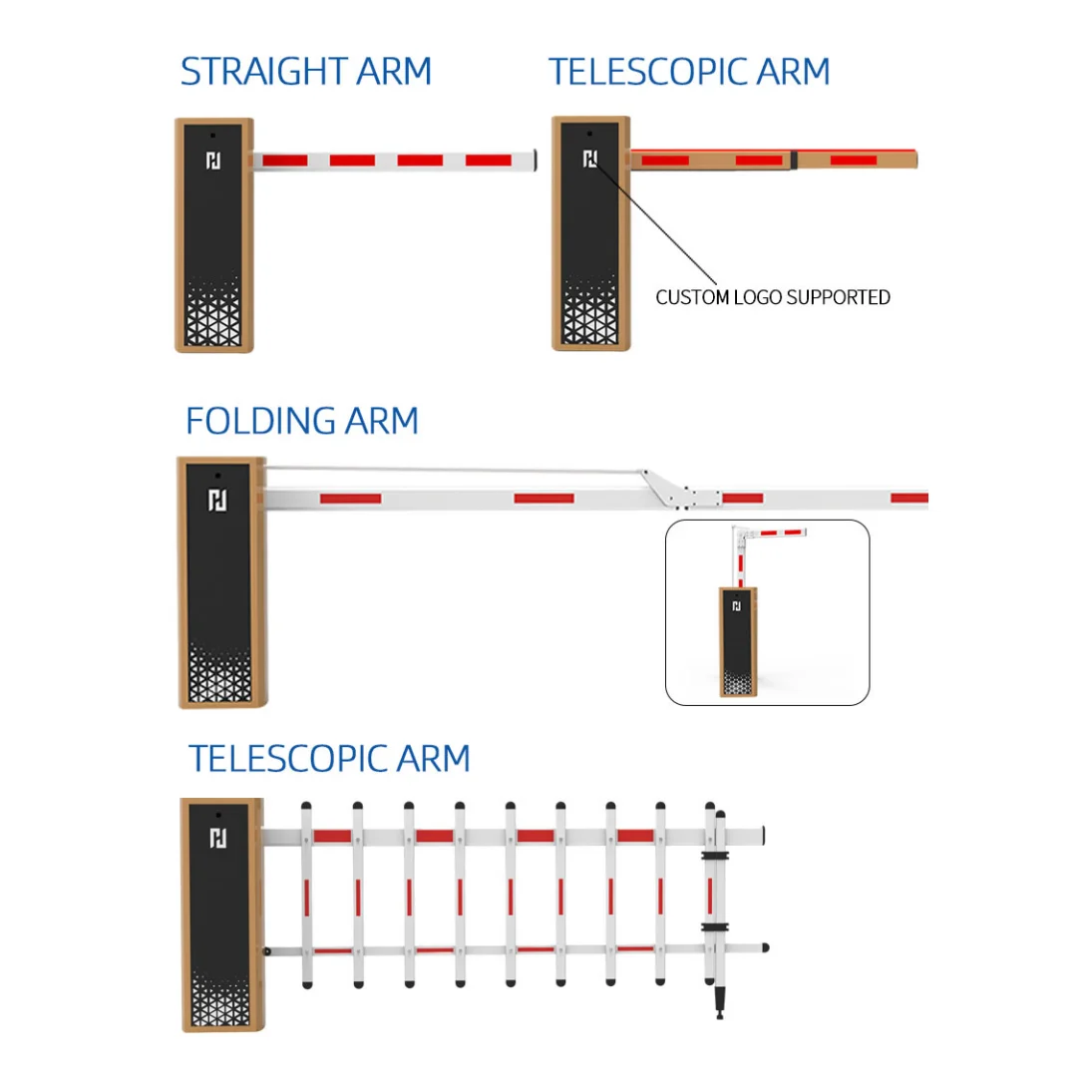
3. Choose the boom type according to the available space
Straight boom
The straight boom may be appropriate for accesses with sufficient clear height and an unobstructed opening path. Before purchasing, check the ceiling height, the position of signs and light fixtures, the presence of trees or structures and the distance available for the boom's full movement.
Articulated or folding boom
Where height is limited, such as covered garages or entrances with low ceilings, an articulated boom may be an alternative, provided it is available for the chosen model and suited to the site. Check the opening geometry, the dimensions and the limitations described in the technical documentation.
4. Check the specified construction and duty rating
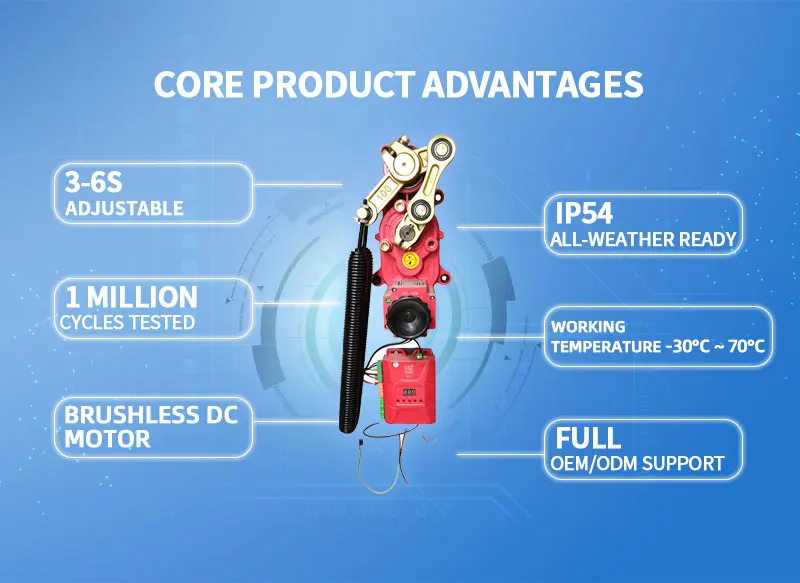
The term "heavy-duty" must be confirmed by technical data, not just promotional descriptions. Request information about the structure, the drive mechanism, the duty rating, the environmental conditions and the installation requirements. Compare models within the same application and confirm which parameters are guaranteed by the manufacturer.
Also ask about the availability of spare parts, inspection procedures and recommended maintenance. Actual durability depends on compatibility between the equipment and the demand, the quality of the installation and compliance with the maintenance plan.
5. Plan the safety features
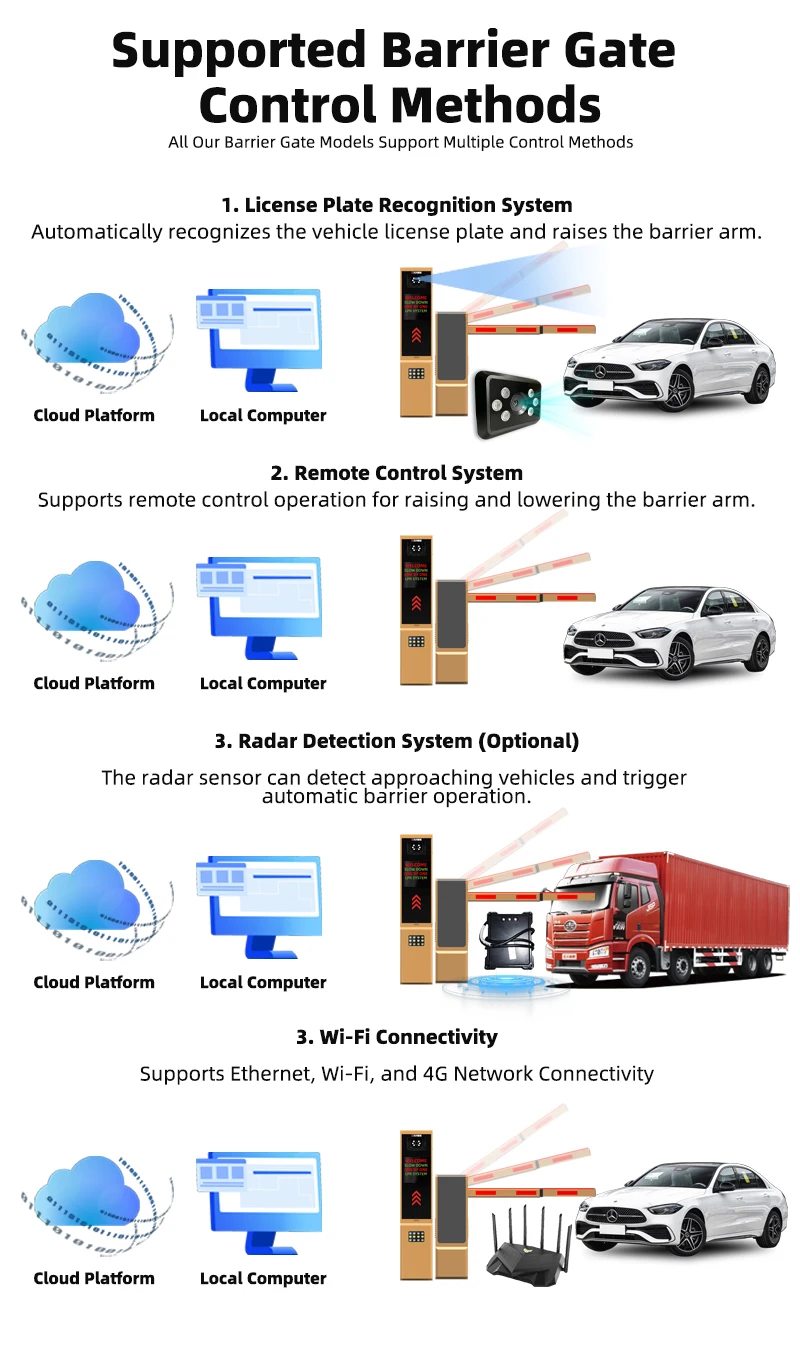
A barrier must be part of a safe circulation system. Assess the need for presence sensors, photocells, inductive loops, radars, warning lights and other compatible devices. Selection depends on vehicle flow, the presence of pedestrians, the lane geometry and the specific risks of the site.
Confirm how the system behaves if a sensor detects a vehicle, if there is a power interruption or if manual operation is required. Request the model manual and include functional tests in commissioning. Installation, adjustments and emergency procedures should be defined by qualified professionals, in accordance with the manufacturer's instructions and the applicable standards.
6. Check compatibility with access control
A heavy-duty barrier can be used with different authorization methods, depending on the available components and interfaces. The options may include remote control, push button, intercom, RFID reader, parking ticket and automatic license plate recognition (LPR/ANPR). Do not assume that all these features are integrated or included in the base equipment.
If the project requires LPR/ANPR, check compatibility between camera, software, controller and barrier. For installations in Brazil, test reading with the plate format used at the site and under real conditions of lighting, angle, speed and connectivity. If personal data is processed, consider the applicable obligations under the LGPD (Brazil's data protection law) and the development's privacy policies.
7. Consider environmental conditions and power supply
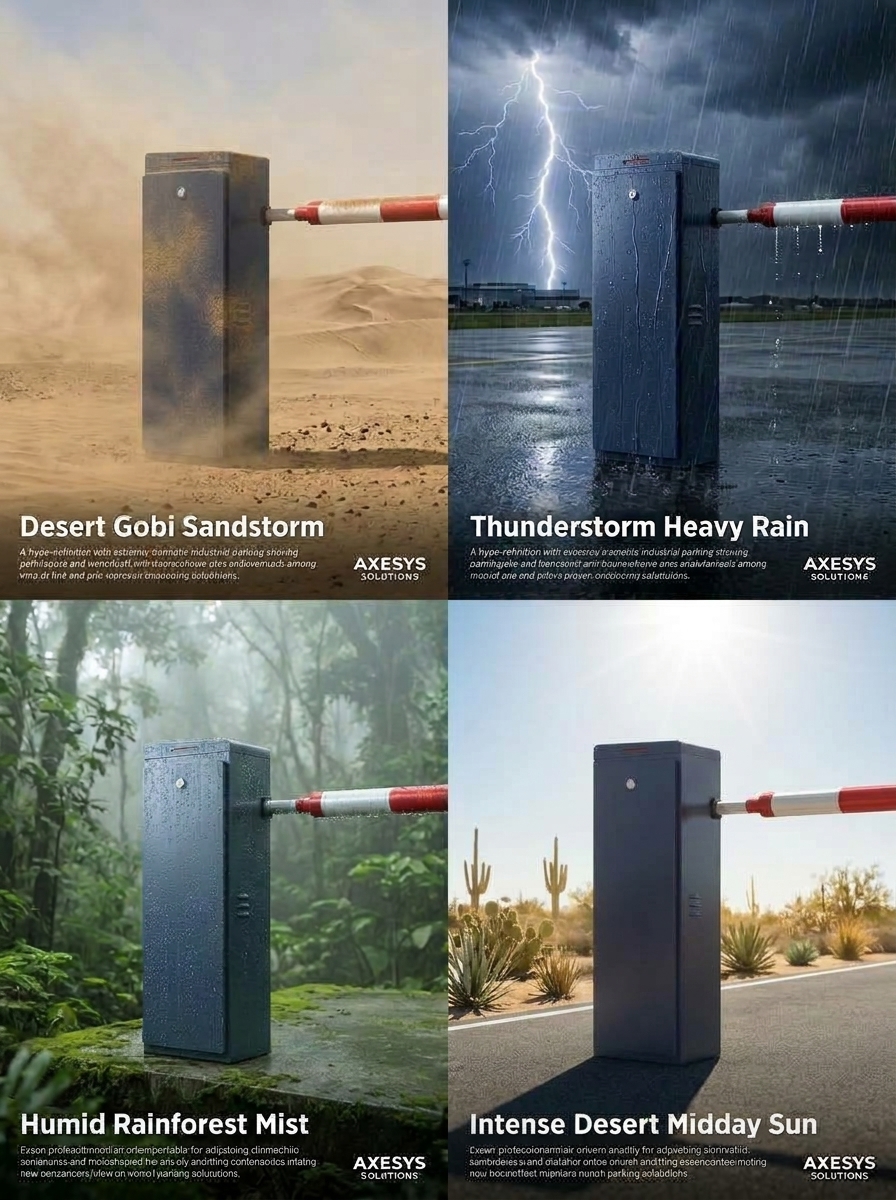
The barrier may be exposed to rain, dust, heat, humidity, solar radiation and temperature variations. Check the operating conditions and the degree of protection specified for the model, as well as the need for shelter, drainage, grounding and electrical protection. Do not assume that all equipment has the same environmental resistance.
Also confirm the voltage and frequency of the power supply, the cable infrastructure and the space required for maintenance. A technical visit before installation can help identify obstacles and avoid costly changes during construction.
8. Evaluate maintenance, warranty and support
Request the recommended maintenance plan, the list of periodic checks and guidance on identifying signs of wear. Confirm the warranty terms, the availability of components and the technical support channel. At a critical access point, consider how a failure will be handled and which operational alternative will be available during maintenance.
Total cost of ownership is not just the initial price. Include installation, accessories, integration, inspections, parts, maintenance and the operational impact of any unavailability. Compare proposals with the same technical scope to avoid differences that are not visible in the quoted price.
9. How to evaluate a BAROXON solution?
When evaluating BAROXON, start with the models actually listed in the official catalog for the Brazilian market. Compare the specifications of the chosen model with the lane width, traffic volume, environment, safety requirements and access control methods of the project. Request the updated datasheet and confirm in writing the options, accessories and compatible integrations before finalizing the specification.
Avoid choosing based only on price or on a generic claim of high resistance. The best option is the one whose documentation proves that it meets the operating cycle, dimensions and real site conditions, with adequate support and maintenance.
Frequently asked questions
What makes a barrier suitable for intensive use?
Suitability depends on the specified duty rating, compatibility with the vehicle flow, installation conditions and the maintenance plan. Ask for technical data on the specific model instead of relying only on the term "heavy-duty."
Is a barrier with a longer boom always better?
No. The length must match the lane width and stay within the model's limits. An unsuitable boom, or one modified outside the specifications, can compromise operation and safety.
Can a heavy-duty barrier work with license plate recognition?
It may be possible when the barrier, controller, camera and software are compatible. Confirm the integration and test recognition under the site's real conditions before putting the system into operation.
What data should I send to the supplier to receive a quotation?
Provide the passage width, the clear height, the estimated vehicle volume, the peak periods, the environment, the authorization method, the desired safety devices and the existing systems that need to be integrated.
Conclusion
When buying a heavy-duty vehicle barrier, prioritize technical suitability to the operating volume, the passage dimensions, the safety requirements and the environment. Confirm the official specifications of the model, the compatibility of accessories and the maintenance conditions before purchase. A complete evaluation helps select a solution that is better aligned with real operation, instead of deciding only on price or on the commercial description.