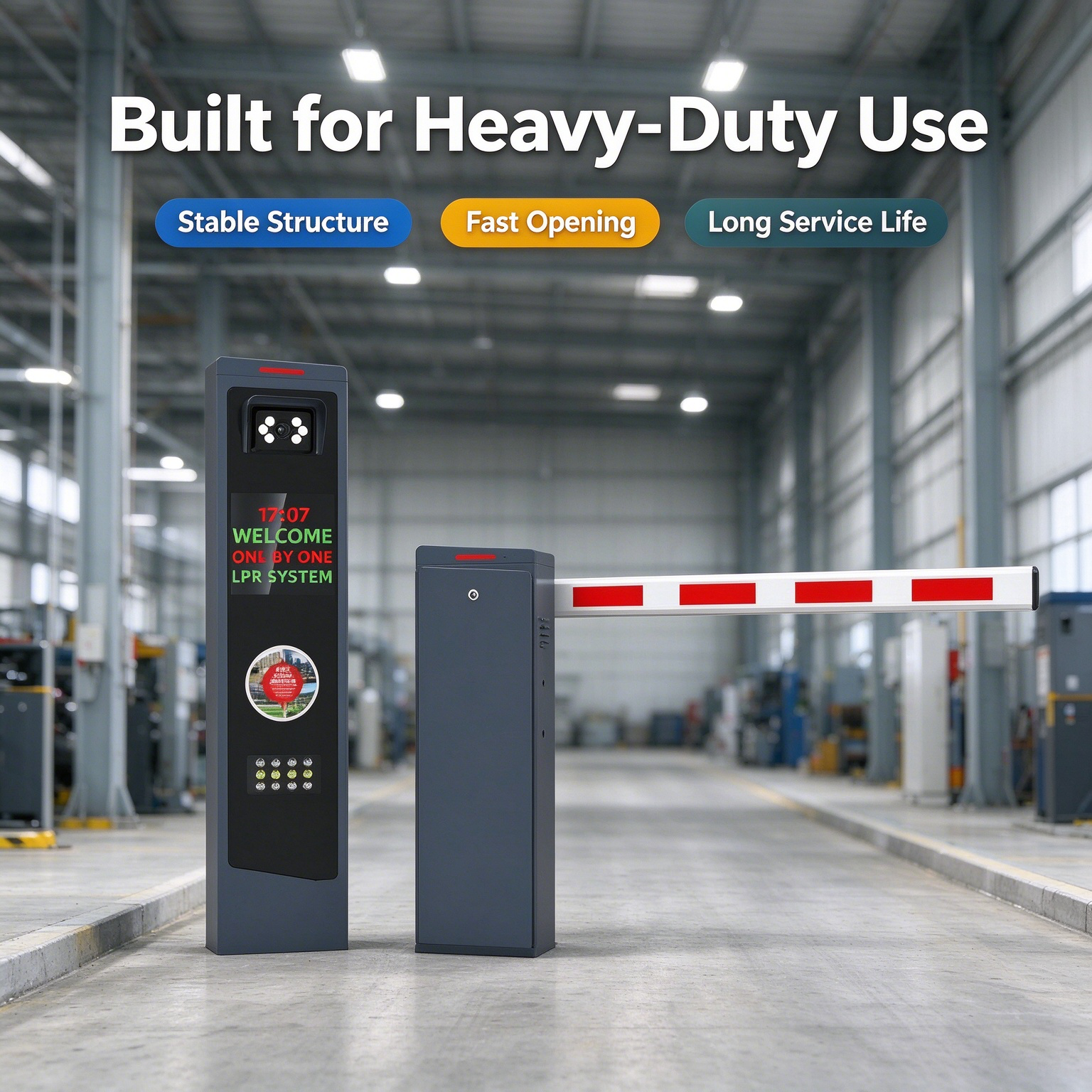
Comparing Barrier Gate Manufacturers
1. Start with the use scenario
Before requesting quotations, describe the site: residential condominium, commercial parking lot, shopping center, factory, logistics center or high-traffic access point. Provide the average and peak flow, the vehicle type, the lane width, the exposure to rain and sun, and the estimated number of cycles per hour.
A clear specification allows equivalent proposals to be compared. Without this data, a seemingly cheap quotation may include an unsuitable barrier gate or leave out essential accessories.
2. Compare the product range, not just one model
Check whether the supplier offers alternatives for different conditions: straight-boom barrier gates for standard entrances, articulated booms for sites with limited clear height, grid-style booms for applications requiring greater visual closure, and high-speed models for frequent traffic. The choice depends on the entrance geometry and the project, not just the appearance of the equipment.
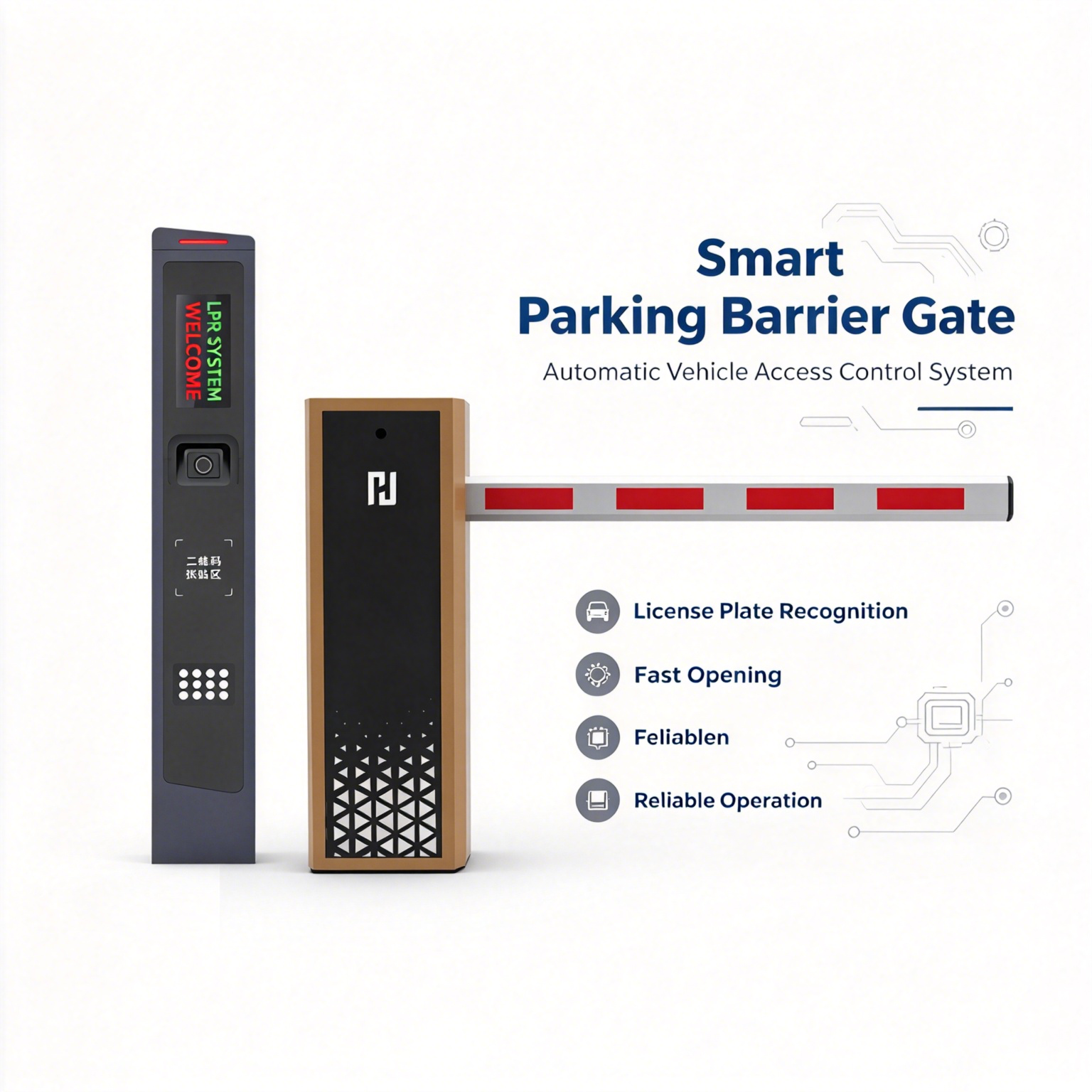
Image for review: articulated-boom barrier gate assembly from the Notion album.
Request the datasheet for the quoted model and confirm the boom length, the opening and closing time, the duty cycle, the power supply, the dimensions, the manual release method and the permitted environmental conditions. Do not accept generic figures that do not reference the specific model.
3. Assess manufacturing quality and testing
Ask how the manufacturer verifies boom balance, opening and closing limits, repeated operation, weather protection and safety system response. Request reports or evidence applicable to the model offered, rather than relying only on promotional statements.
Also check product traceability, model identification, installation documentation and spare parts availability. Company certifications and product certifications are not necessarily the same thing; confirm the scope, the validity and the applicability to the equipment purchased.
4. Compare the safety features
A barrier gate is part of an access control system, but it also moves near vehicles and people. Check compatibility with radar sensors, inductive loop detectors, photocells or other devices specified in the project, as well as the reversal or anti-crush logic where available.
Ask the integrator to explain how the system behaves when a vehicle stops under the boom, when a sensor fails or when power is lost. The response must be part of the site's safety design and operating procedure.
5. Check integration with LPR/ANPR, RFID and software
If the goal is to reduce manual intervention, confirm whether the barrier gate can work with the chosen identification method. LPR/ANPR uses automatic plate reading; RFID identifies a credential by radio; cards, QR codes, intercom and operator validation may be options depending on the project. Do not assume that all readers, controllers and software are compatible with one another.
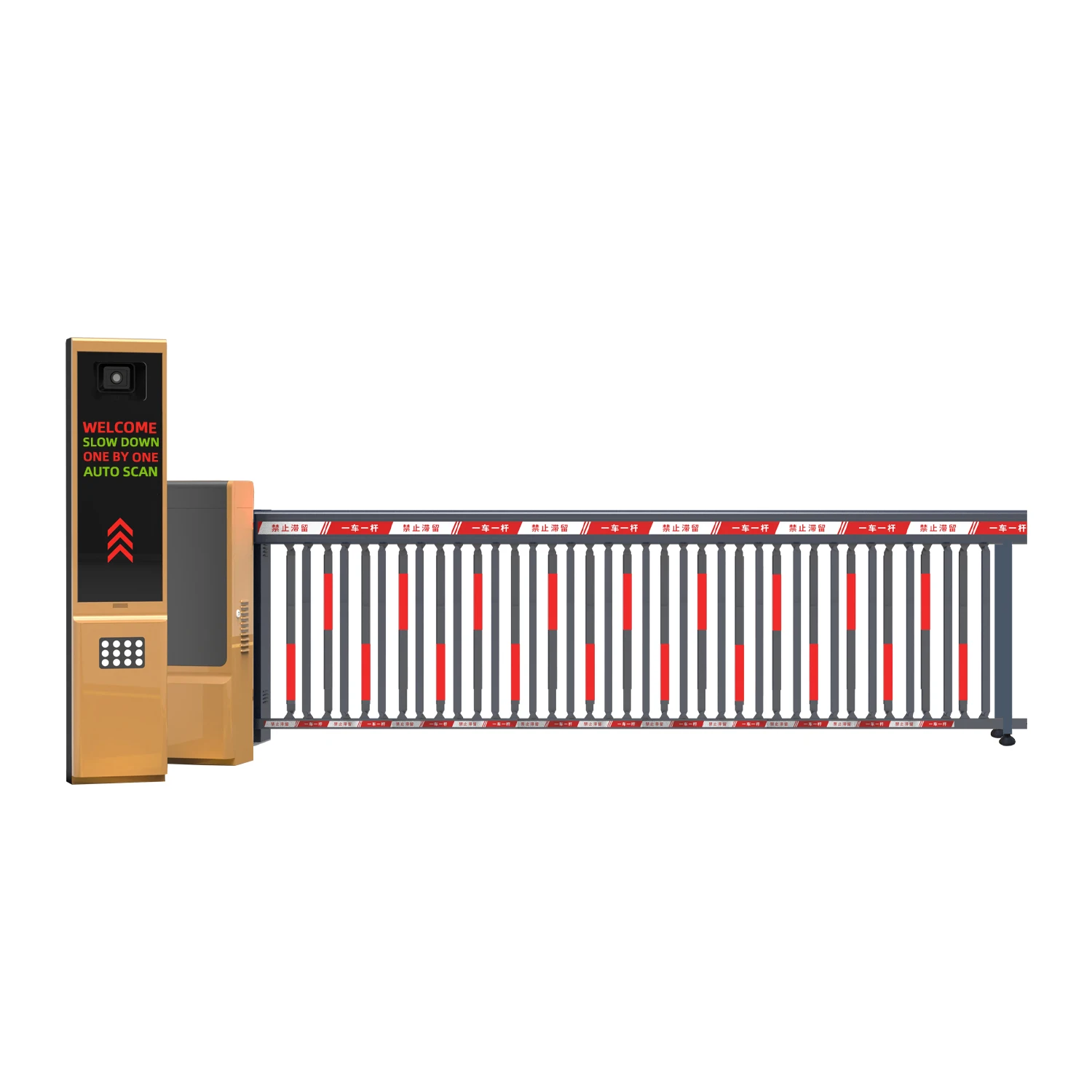
Image for review: equipment related to plate identification; validate the model and the exact function before publishing.
Request a compatibility matrix: barrier gate model, camera or reader, controller, parking software, communication protocol, logged events and network requirements. Run an end-to-end test with real Brazilian plates in daytime and nighttime conditions before promising a recognition rate.
6. Compare support, warranty and spare parts
Ask who is responsible for installation, commissioning, training, remote diagnostics and maintenance. Confirm the warranty periods and terms, the excluded items, the availability of electronic boards, motors, booms, sensors and controls, and the process for requesting assistance.
For buyers in Brazil, clarify the shipping time, the applicable logistics and tax costs, the import documentation where relevant and the language of support. These factors can affect the cost and the recovery time after a failure.
7. Compare total cost of ownership
Do not compare only the price of the barrier gate. Include controllers, sensors, readers, cameras, software, network infrastructure, installation, training, maintenance, parts, energy consumption and possible downtime. A system with a lower initial price may cost more if it requires frequent interventions or does not handle the real flow.
Use a spreadsheet with the same items for all suppliers and record which values are included, which are optional and which depend on technical confirmation.
8. Ask objective questions before closing the order
- Which model suits the lane width and the stated cycle volume?
- What is the documented opening/closing time for that model and configuration?
- Which safety sensors are compatible and included?
- Does the solution integrate with the LPR/ANPR, RFID or software already in use?
- Which tests, manuals, diagrams and documents will be delivered?
- Which parts are considered consumables, and what is the typical supply lead time?
- Who is responsible for installation, training and after-sales service?
- Which items still need to be validated before signing?
9. How to evaluate BAROXON for your project
BAROXON offers categories of automatic barriers, high-speed barriers, LPR/ANPR systems, RFID solutions, radar sensors and access control accessories. Use this range as a starting point to request a configuration compatible with your site, and confirm every specification in the model's current datasheet and in the formal proposal. / BAROXON
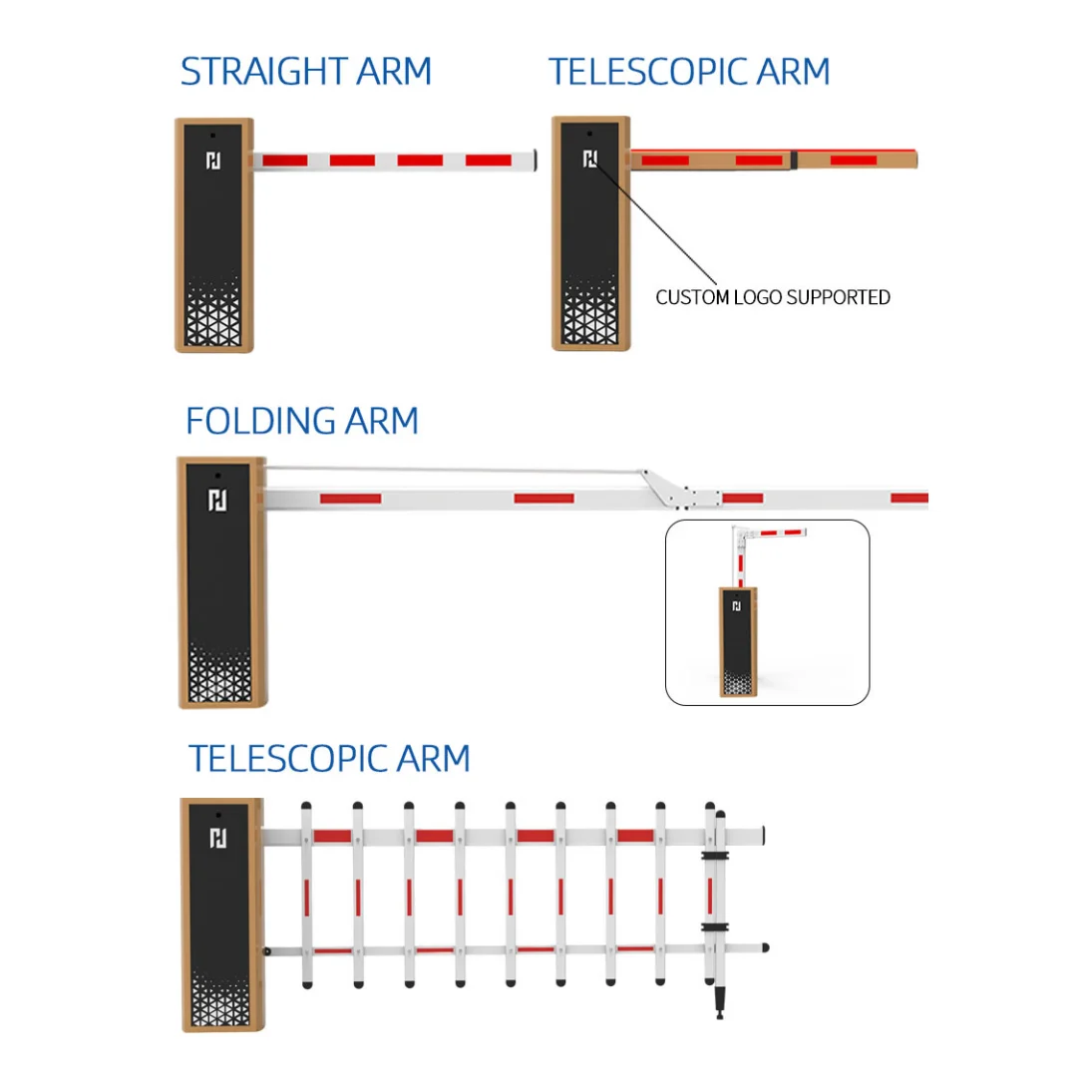
Image for review: product photo from the Notion album. Confirm the exact model and its suitability for the text.
Send the supplier the lane width, the peak flow, the desired boom type, the environmental conditions, the identification method, the existing infrastructure and the expected support level. With this data, the proposal can be evaluated technically, not only by price.
Frequently asked questions
What is the difference between a barrier gate manufacturer and a reseller?
The manufacturer may offer direct access to engineering and product configuration; the reseller or integrator may add local installation, maintenance and integration with existing systems. Assess the actual responsibility of each party, not just the commercial title.
Should I choose the fastest barrier gate?
Not necessarily. Cycle time must match the vehicle flow and the safety control. Higher speed does not solve queues caused by slow validation, delayed payment, poor plate reading or inadequate entrance design.
Can a barrier gate work with any LPR camera?
This should not be assumed. Confirm interfaces, protocols, controller, software and support for the plate format used. Run on-site tests before final acceptance.
How can I compare proposals from different suppliers?
Standardize the scope and compare the same boom model, duty cycle, sensors, controllers, software, installation, warranty, parts and support. Clearly mark information that has not yet been verified.
What documentation should I request?
Request the model datasheet, the installation and operation manual, the electrical diagrams, the warranty terms, the parts list and the conformity documentation applicable to the product and the project.